Half Wall vs Floor to Ceiling Bathroom Tiles:
How High Should You Tile?

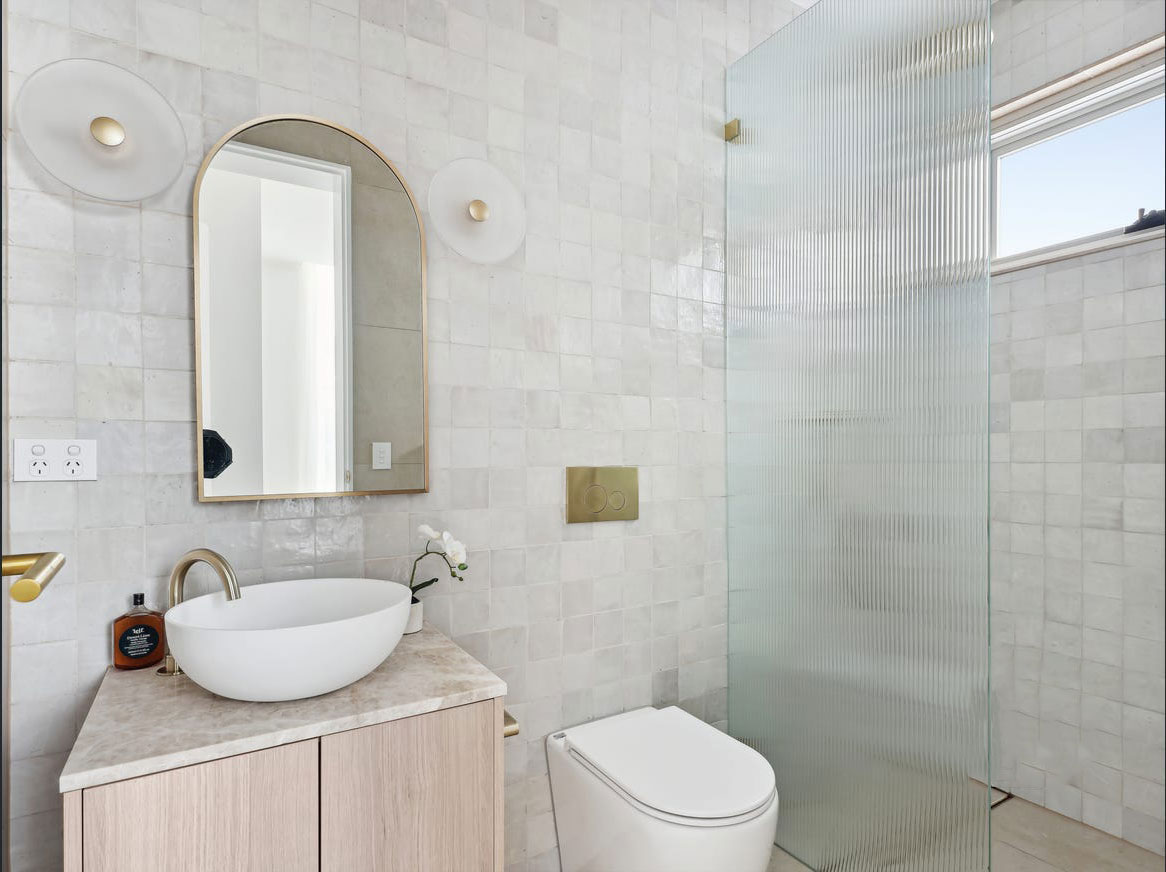
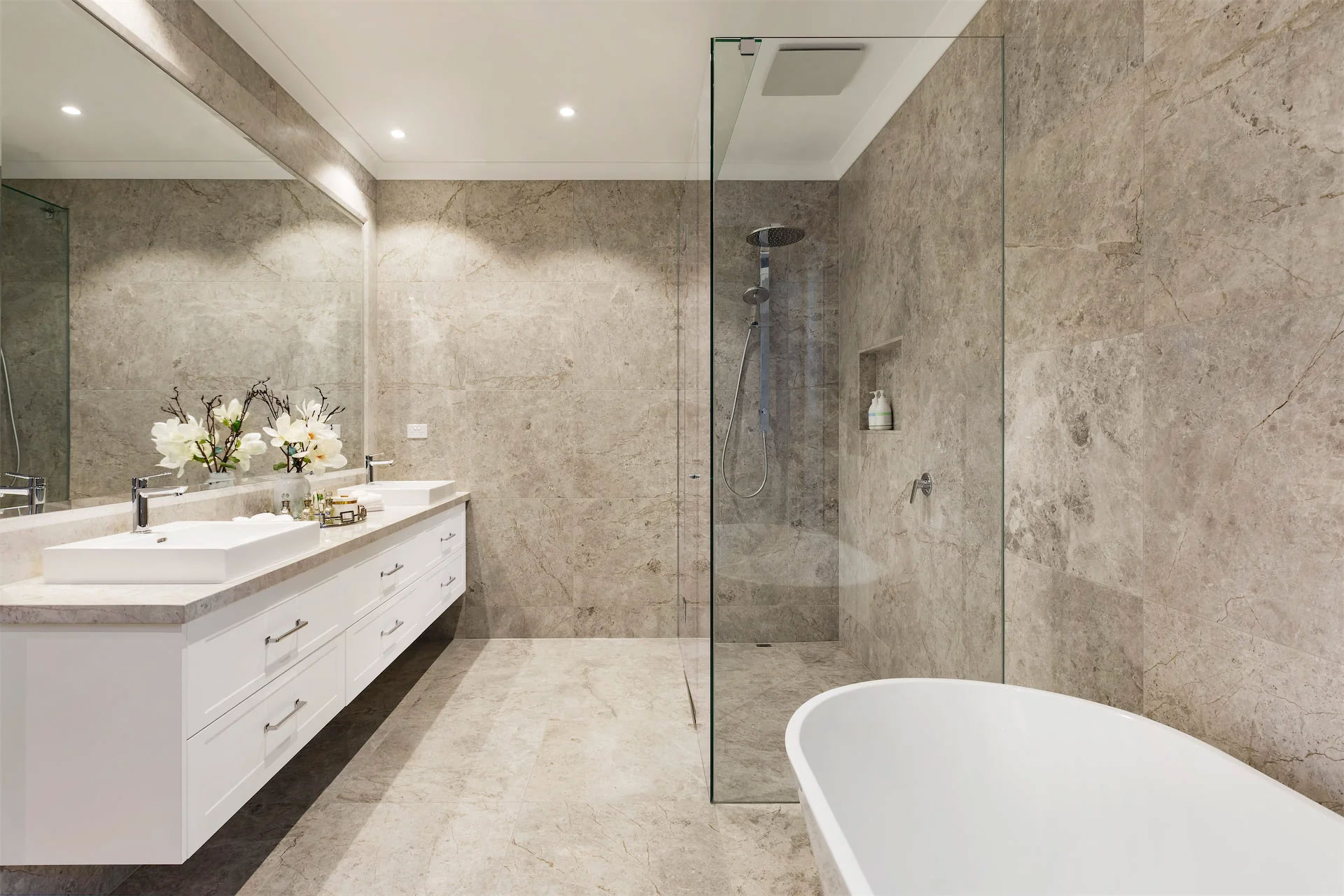
Bathroom with Sicily Light Grey porcelain tiles on half-height vanity walls, floor-to-ceiling shower walls and the floor.
Peter Yusuf

Planning an exciting pinterest worthy tile reno for your bathroom, shower area, or powder room? Styling these rooms comes with an important question that renovators must confirm beforehand to save on time, budget and get the best performance out of the tiles.


Should you tile half-wall or go for floor to ceiling tiles? 

Floor-to-ceiling tiling means covering the walls from the floor up to the ceiling. The ceiling itself is not tiled. Getting this decision right gives you the best balance between style, performance, practicality and proper functionality particularly when it comes to tiling water-exposed rooms.

So, should you go for a more visual personality or practical performance when choosing the right tile height? 

In short, choosing the right tile height comes down to two things: how much water the wall is actually  exposed to and how much of the room you want the tile to visually own. Every tiled wall does two jobs at once. One is practical: keep water off the plaster and make cleaning easy. The other is visual, set the mood of the room and give it a personality.

Getting that equation right is really what this decision is about. Tile too little on a wet wall and the room fails its practical job. Tile too much on a dry wall and money goes toward protection the wall never needed.

When Half Wall Tiling Earns Its Place

Half wall tiling works because it lets a room breathe and adds more visual appeal. Stopping the tile at bench height or just above head height gives the upper wall room for paint, wallpaper or timber panelling, materials far cheaper to refresh later than tile. That flexibility is the real argument for going half height, more than the upfront saving, which is real but secondary.

It also suits smaller, low-splash rooms well. A powder room only sees water at the basin. A laundry only sees it around the trough. In both cases a half height run, paired with a lighter painted wall above, keeps a tight room from feeling closed in.

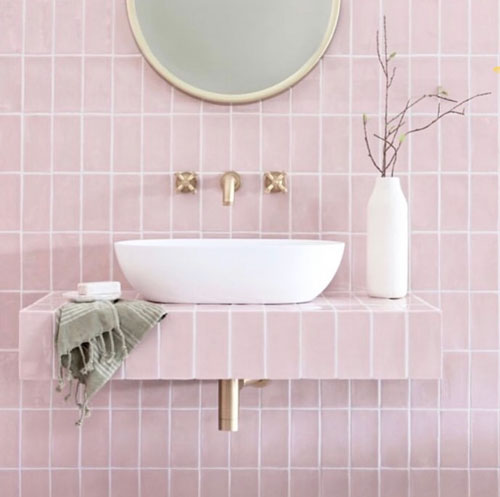
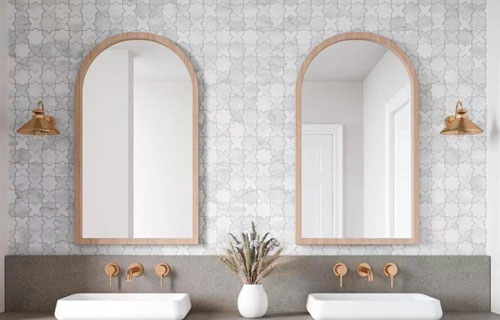
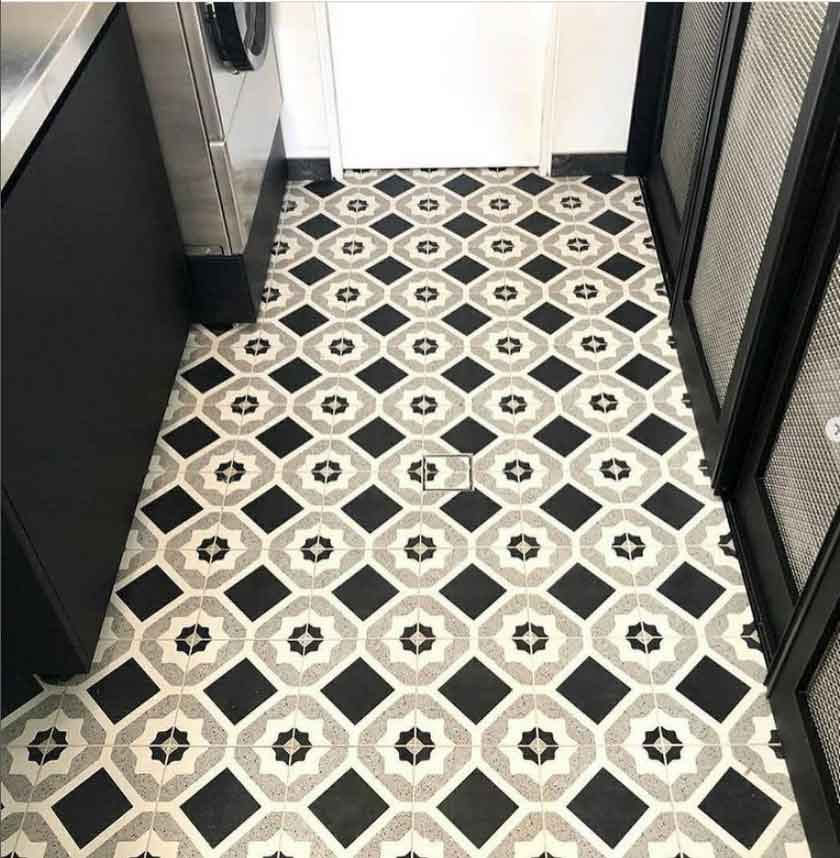
Half wall tiling is also where a feature tile earns its keep. A bold pattern across a full floor to ceiling wall can overwhelm a small room, but the same pattern stopped at 1.2 metres gives a better visual appeal. The decorative tiles range and Moroccan zellige tiles from Royal Tiles collection both suit this brief, texture and colour in a contained band, without needing the whole wall to make a style statement.

When Floor to Ceiling Tiling Is the Right Call

Floor to ceiling tiling is non-negotiable inside a shower recess and strongly recommended anywhere a wall takes regular, direct water contact. Beyond the waterproofing requirement, full height tiling is simply easier to live with in a high-use bathroom. Tiled surfaces wipe down in seconds, while painted plaster above a half wall line, in a room that sees daily steam, will show wear sooner.

There’s a genuine visual argument too. A wall tiled floor to ceiling reads taller than the same wall broken by a paint line partway up, which matters in project homes with standard 2.4 metre ceilings. Large format tiles from the porcelain tiles range, laid with tight, minimal grout lines, push that effect further, since fewer joins mean less interruption across the wall.

Room by Room Guide: Where the Line Should Actually Sit

  • Main bathroom: full height inside the shower is required and most renovations now carry that finish around the whole room to avoid an obvious material change partway around.

  • Ensuite bathrooms: same shower rule applies, though a smaller footprint often makes a half wall vanity wall a practical compromise.
     
  • Powder room: go confidently for half wall tiling, given low water exposure and the design payoff of a bold feature tile in a contained band.

  • Laundry: full height behind the trough and washing machine recess where splash is a real concern.

  • Kitchen splashback sits in its own category, governed by heat and grease exposure rather than AS 3740 and is worth treating as a separate decision, one covered in more depth in Royal Tiles’ kitchen splashback tiles range.

Getting the Transition Right

Where a half wall tile line stops matters as much as the tile chosen for it. Modern bathrooms look great with a mitred edge, which is a seamless finish created by cutting the tile at an angle to create a clean corner with no apparent edge. A metal or PVC tile trim is the more budget-friendly option and still looks neat when colour-matched to the grout. A stone or timber ledge, sitting proud of the tile line, adds a shelf detail while covering the transition edge, useful in bathrooms where a display or storage ledge is already part of the plan.

Whichever method is used, the transition line should sit at a height that relates to something else in the room, the top of a vanity, a door head, a window sill, rather than an arbitrary measurement. A transition line that ignores the room’s existing proportions is usually the detail that makes a half wall tile job look unfinished rather than intentional.

A Quick Note on Costing Details

As discussed upfront, Half wall tiling typically uses roughly half to two thirds the tile quantity of a full height job, plus less labour time for cutting and setting. On a standard 2.4 metre bathroom wall, that difference is worth factoring into a renovation budget. It shouldn’t be the deciding factor on its own, water exposure comes first, but on walls where either approach is genuinely viable, cost is a fair tiebreaker.

Choosing Tile Height With Confidence

If you have any doubts about the right tile height, the decision comes down to two questions worth asking about any wall before tiling begins. Does this wall see regular water contact? And how much of the room’s overall design needs to come from the tile itself, rather than paint, panelling or fixtures around it. Answer both honestly and the height mostly decides itself.

For help working through this room by room, the full bathroom tiles and bathroom wall tiles ranges are organised to make comparing half wall and full height options straightforward and Royal Tiles’ Auburn and Lidcombe showrooms hold physical samples of everything mentioned here.

If you are not convinced, book a free design consultation and talk to the experts at Royal Tiles who will guide you through the entire process. Shop the versatile and exquisite tiles needed to make your design dreams a reality from Royal Tiles in Auburn and Lidcombe.

Magazine and flower pot on white penny round mosaic tile floor Magazine and flower pot on white penny round mosaic tile floor mobile version

Slash prices, not your budget!

Enjoy savings of up to
50% on all the clearance items.

Frequently Asked Questions

Is half wall tiling budget effective than floor to ceiling?

Yes, for typical renovation and decoration cases,half wall tiling is cheaper from different considerations. Half wall tiling consumes roughly half to two thirds the tile quantity of a full height wall, plus reduced labour and cutting time, the exact saving depends on wall height and tile size.

Does floor to ceiling tiling make a small bathroom look bigger?

It can. Full height tiling removes the visual break a half wall line creates, which tends to make the wall and by extension the room, read as taller and less interrupted, particularly useful in bathrooms with standard 2.4 metre ceilings.

What is the best transition detail for half wall tiles?

A mitred edge gives the cleanest, most seamless finish. A metal or PVC trim is a more budget-friendly alternative. A stone or timber ledge works well where a shelf detail is also wanted at the transition line.

Peter Yusuf - Royal Tiles

Peter Yusuf

linkedin

Peter Yusuf is a seasoned Sales and Business Development Manager at Royal Tiles in Sydney, Australia, with a proven track record of success in the global architectural and interior design sectors. With over a decade of experience, he possesses a rich understanding of tile selection and design that has helped countless clients transform their spaces. Peter's expertise spans a wide array of materials and styles, positioning him as a trusted authority in the tile industry.

Japanese Mosaic Tiles: Tokyo Range Ideas & Buying Guide

Japanese Mosaic Tiles: Tokyo Range Ideas & Buying Guide

November 4, 2026

Tokyo Espresso is hard to photograph. Hold a sheet up to a window and part of it looks almost black,…

Commercial Floor Tiles Sydney: Office & Retail Guide

Commercial Floor Tiles Sydney: Office & Retail Guide

October 30, 2026

When you’re tiling a restaurant, office or shop in Sydney, start with what the tile needs to do, not how…

Black & Dark Tiles for Sydney Bathrooms & Kitchens

Black & Dark Tiles for Sydney Bathrooms & Kitchens

October 26, 2026

Black tiles in Sydney bathrooms and kitchens cover more territory than one colour suggests. Origin Black offers a pure matte…

Call Now