Handmade Tiles: Complete Buying Guide (2026)

Handmade green tile feature wall bathroom with glossy vertical tiles and modern basin design
Peter Yusuf

Key Takeaways

  • The whole appeal of handmade tiles is their imperfection, like that variation in glaze and texture is the feature, not a flaw.

  • They work best in smaller, high-visibility spots like splashbacks and bathroom walls, which also makes the premium cost far more digestible than it first sounds.

  • Unlike most materials, they genuinely improve with age rather than just wearing out. Some handmade tiles in old Moroccan and Italian buildings are still going strong after centuries.

  • Maintenance is simpler than people assume; a mild cleaner and avoiding anything acidic is really all it takes, day to day.

  • Photos don’t capture them well if you’re seriously considering them, seeing them in person changes your perspective entirely.

  • They’re not the universal answer. High-traffic floors or tight budgets are situations where a standard tile is just the smarter call.

What Are Handmade Tiles?

Handmade tiles are pretty much exactly what the name suggests. Instead of being pressed out by a machine in identical batches, they are shaped, finished and glazed by actual people. Clay gets rolled or formed by hand, dried slowly and fired in a kiln. Some styles, like Moroccan Zellige, have been made this way for hundreds of years and honestly, the technique has barely changed at all.

And it is not just homeowners who love them. When award-winning Melbourne architect John Wardle renovated his 25-year-old home, he did not play it safe. He chose handmade glazed ceramic tiles for his kitchen splashback and master bathroom. Not a client project or a showroom display but his own home that he lives in every day. That kind of choice tells you everything you need to know about how much the right people value them.

Key things that set them apart:

  • Natural variation in colour, glaze depth and surface texture across each tile.

  • Slightly uneven edges that usually call for a wider grout line.

  • A surface that actually responds to light and changes throughout the day.

  • A look that gets better with age rather than just wearing out.

Handmade Tiles vs Machine-Made Tiles

Here is the straightforward version of this comparison.

Feature
Handmade Tiles
Machine-Made Tiles
Appearance
Organic, textured and unique
Uniform, clean and precise
Consistency
Varies intentionally
Highly consistent with rectified edges
Durability
Very good with proper care
Generally very durable
Cost
Premium pricing
Wide range, often more affordable
Best for
Splashbacks, bathroom walls, feature walls
High-traffic floors, large-scale areas

Machine-made options like porcelain tiles and ceramic tiles are the reliable workhorses of most Australian renovations and honestly, there is nothing wrong with that at all. They do the job well and for a lot of projects, they are absolutely the right call.

If you want a space that feels like yours rather than a carbon copy of every other renovation on the street, handmade tiles are just in a different category altogether.

How Much Do Handmade Tiles Cost in Australia?

Quality handmade tiles in Australia generally sit somewhere between $80 and $200+ per square metre. Moroccan Zellige and Italian hand-glazed ceramics tend to land toward the top of that range and some specialty artisan collections go even higher.

A few things push the price up and they are all worth understanding:

Craftsmanship. Someone is hand-forming and glazing every single tile. That is slow, skilled work and the cost reflects that reality.

Materials. Natural clays, mineral-based glazes and traditional pigments cost more than what goes into a standard machine-made tile.

Origin. Tiles that come from Morocco, Spain or Italy carry import costs that domestically produced machine-made tiles simply do not have.

Finish type. Reactive glazes and custom colour ranges cost more than standard options.

Yes, it is more expensive than a standard tile. But most people who have gone down this path will tell you the price stings once and the result makes you happy every time you walk past it. That is a pretty decent trade-off.

Where Do Handmade Tiles Work Best?


Kitchen Splashback


Modern Australian kitchen featuring sage green vertical splashback tiles with light oak cabinetry and white quartz island benchtop.

Hands down the most popular spot for handmade tiles in Sydney homes right now. A kitchen splashback sits right at eye level and it is usually the first thing anyone notices when they step into the kitchen. Handmade tiles in warm whites, earthy tones or sage greens bring a personality to that space that you just cannot get from a flat, uniform surface.

The subtle colour variation also means the splashback looks different depending on the light and honestly that is half the appeal. Morning light, evening warmth, overhead pendants at dinner time. It changes and that keeps it interesting.

Pair with a stone benchtop and some brushed brass hardware and you have got the look that is all over every Sydney interiors account right now.


Bathroom Walls


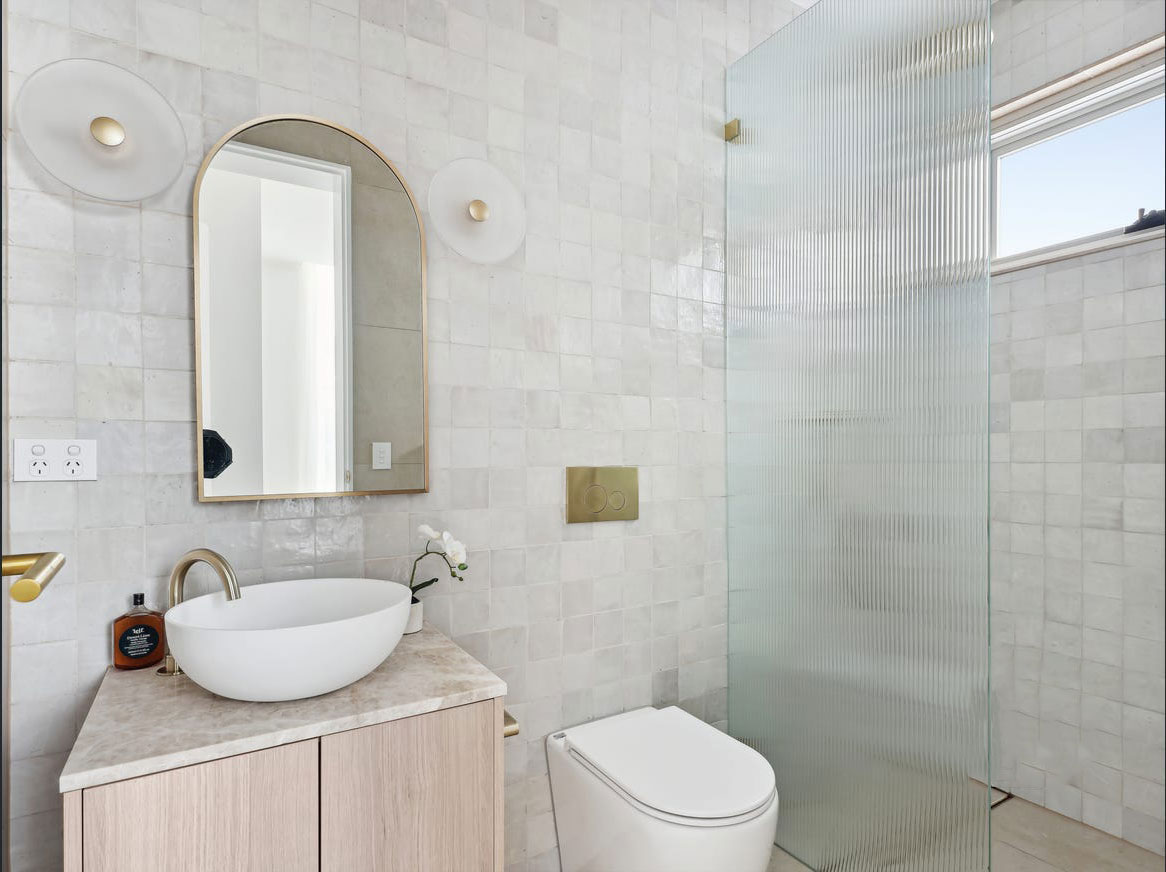
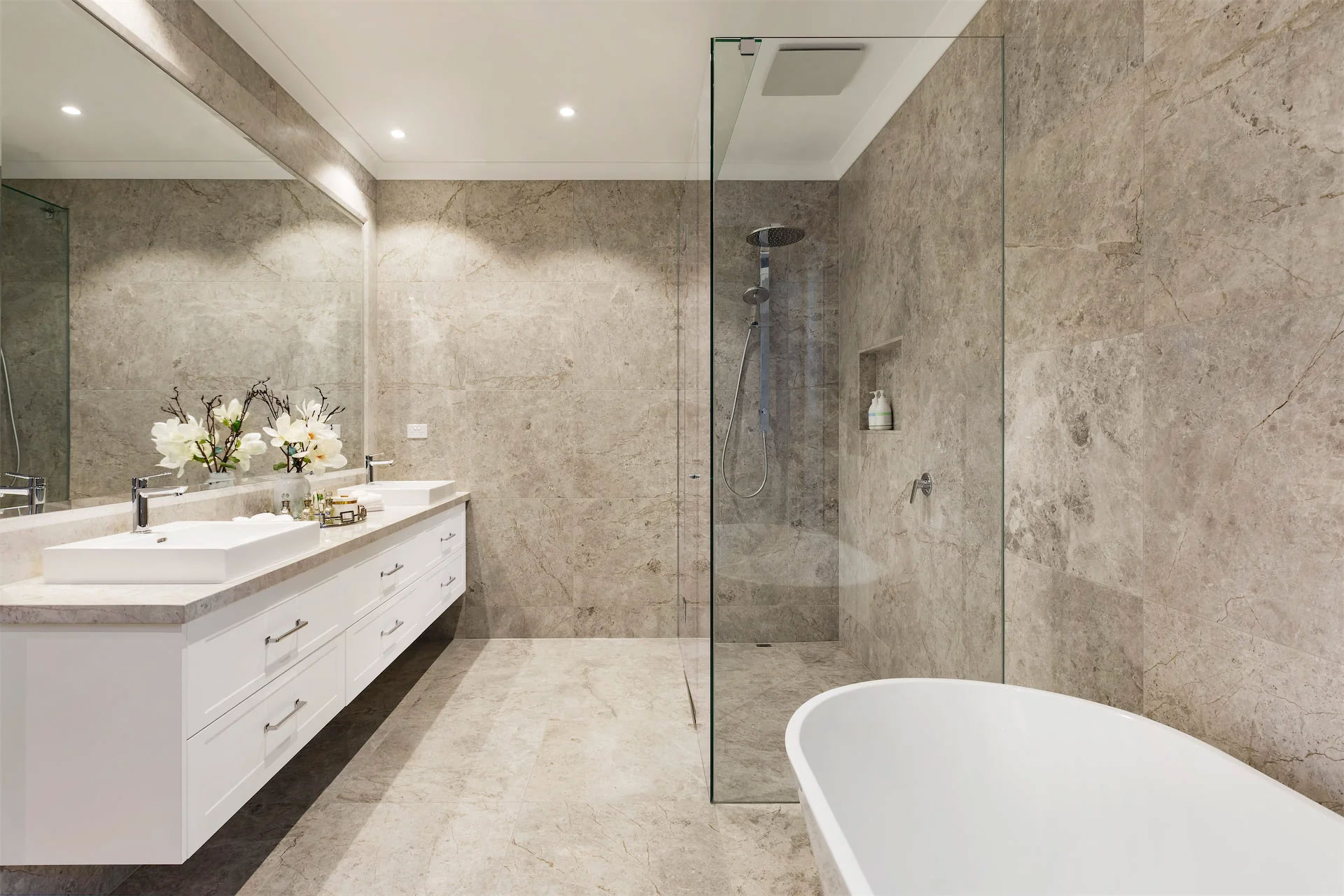
Modern bathroom with handmade vertical tiles, beige mosaic shower wall and brushed brass fittings.

This is where handmade ceramics genuinely earn their reputation. The way a reactive glaze catches humidity, the way a slightly undulating surface breaks up what would otherwise be a flat boring wall. It creates that spa-like feel that is really difficult to achieve with polished, uniform tiles. For bathroom walls specifically, handmade subway tiles laid in a stacked or herringbone pattern are a choice that will not look dated in five years.

Worth noting: glazed handmade tiles handle wet areas well. Unglazed versions need to be properly sealed first. More on that shortly.

Browse the full bathroom tile range to see what pairs well with handmade styles.


Feature Walls


Green handmade tile feature wall with glossy vertical tiles and modern bathroom basin.

A single feature wall is probably the smartest way to get the handmade tile look without blowing the whole renovation budget. In a living room, entry hallway or bedroom, a tiled feature wall does something that paint and wallpaper genuinely cannot. Decorative tiles and encaustic tiles are brilliant for this. Bold patterns and rich textures that would be too much across an entire room land perfectly as one statement wall.

The Honest Pros and Cons

Why people love them:

  • Genuinely unique surfaces. No two rooms will ever look the same.

  • They elevate everything around them. Good furniture looks better next to handmade tiles.

  • Artisanal value, especially with heritage styles like Zellige or encaustic patterns.

  • Texture and authenticity are exactly where design is heading in 2026 and handmade tiles are right at the centre of that.

  • Natural light plays off them in a way that changes throughout the day.

What to keep in mind:

  • The upfront cost is real. Budget accordingly.

  • Variation in size means you need to order extra. Around 10 to 15 per cent more than your measured area is the safe approach.

  • Lead times can be longer, especially for imported ranges.

  • Wider grout lines are sometimes needed. Some people love that look. Others prefer tighter joints so it is worth thinking about upfront.

Are Handmade Tiles Actually Worth the Money?

For the right project, yes.

If you’re renovating a home you actually plan to live in for years, handmade tiles are one of those choices that just hold up. Not just visually, but in the way the space feels over time. There’s a reason Sydney interior designers keep coming back to them. When you want a room to feel considered and personal rather than like every other renovation, this is usually where they start.

That said, they are not the right call for every situation. Very high-traffic floor areas, tight budgets or projects where you just need something functional and durable,  clearance tiles or a good quality standard ceramic make more sense. No judgment there at all. The best tile is always the one that suits your actual situation, not just the one that looks best in a photo.

How Long Do Handmade Tiles Last?

A long time, honestly. When handmade tiles are made properly and looked after, they can go for decades without any real drama. Think about it for a second. Some of the most beautiful tiled spaces in the world, old Moroccan riads, Spanish courtyards and centuries-old Italian buildings, are still covered in handmade tiles that are hundreds of years old. They are not falling apart or looking worn out. They are just getting better with age. That is not something you can say about many building materials.

For wet areas like bathroom walls and kitchen splashbacks, glazed handmade tiles are genuinely well-suited. They handle moisture without any fuss and day-to-day cleaning is straightforward. Nothing complicated about it.

For floors, it is a bit more nuanced. Some handmade tiles work on light-traffic floors but you really want to check the slip rating and hardness rating before committing. For anything that gets heavy foot traffic or stays wet a lot, a solid porcelain floor tile is probably the smarter floor option and you keep the handmade tiles on the walls where they look incredible anyway.

Realistic lifespan with decent care? Somewhere between 20 and 50 years is not unreasonable. Some styles actually develop a patina over time that makes them look even better, which is not something you can say about most building materials.

Keeping Handmade Tiles in Good Shape

This part is easier than most people expect.

Daily cleaning

Use warm water and a mild pH-neutral cleaner with a soft cloth or microfibre mop. Avoid acidic or abrasive products.

Sealing

Glazed tiles need no sealing. Unglazed and encaustic styles must be sealed before grouting and topped up every 1–2 years.

Re-grouting

Re-grout every 5–10 years to keep joints clean and refresh the overall appearance of the surface.

If you are unsure whether your tile needs sealing, check with your supplier before grouting. It is a quick question that saves a lot of hassle later.

The tiles themselves usually just need a clean. Likewise, the Royal Tiles blog has a lot more detail on this if you want to get into the specifics of cleaning and maintaining different tile types.

Come and Have a Look in Person

Here is the truth about handmade tiles. Photos do not really do them justice. You can scroll through images all day and still not fully get it until you are actually holding one and seeing how the glaze moves in the light. That is not a sales pitch; it is just how it is with this type of tile.

Contact Royal Tiles. We have been around since 1989 and the Sydney showroom is worth a visit if you are serious about your renovation. 

Have a look at the handmade subway tile collection to get a feel for the range or browse everything available in the full product range online first if that is easier. 

Not ready to commit yet? Completely fair. 

Order a few samples and live with them at home for a bit, or book a free design consultation if you want to talk through your specific space with someone who actually knows what they are looking at.

Magazine and flower pot on white penny round mosaic tile floor Magazine and flower pot on white penny round mosaic tile floor mobile version

Slash prices, not your budget!

Enjoy savings of up to
50% on all the clearance items.

Frequently Asked Questions

Are handmade tiles expensive?

Honestly, yes. They cost more than your standard machine-made tile. In Australia, you are generally looking at somewhere between $80 and $200+ per sqm, depending on the style and where they come from. But here is the thing: most people are not tiling an entire house with them. For a splashback or a bathroom wall, the total spend is usually much more manageable than the per sqm figure suggests. And almost everyone who does it says they would do it again.

Do handmade tiles crack easily?

No more than any other tile. The colour variation and texture you see in handmade tiles are glaze and surface characteristics — they have nothing to do with how strong the tile is. Tiles crack when the substrate moves, when something very heavy is dropped on them or when they are not installed properly. That applies to every tile on the market, not just handmade ones.

Are handmade tiles good for bathrooms?

They are actually brilliant for bathrooms, particularly walls and shower surrounds. The texture adds something that flat polished tiles just cannot and glazed handmade tiles handle moisture without any issues. The one thing to watch is unglazed tiles in wet spots — those need to be sealed properly before they go anywhere near water.

Do handmade tiles need sealing?

Depends on the tile. Glazed handmade tiles are generally fine without sealing. Unglazed tiles and encaustic styles are a different situation — they do need sealing before grouting and then a top-up every year or two. If you are not sure about the specific tile you have chosen, just ask. It is a quick question that saves a lot of hassle later.

Peter Yusuf - Royal Tiles

Peter Yusuf

linkedin

Peter Yusuf is a seasoned Sales and Business Development Manager at Royal Tiles in Sydney, Australia, with a proven track record of success in the global architectural and interior design sectors. With over a decade of experience, he possesses a rich understanding of tile selection and design that has helped countless clients transform their spaces. Peter's expertise spans a wide array of materials and styles, positioning him as a trusted authority in the tile industry.

Green Tiles: The Complete Style Guide for Sydney Homes

Green Tiles: The Complete Style Guide for Sydney Homes

September 30, 2026

Green tiles cover more design territory in Sydney bathrooms and kitchens than most people expect. Sage green mosaics on a…

Cobblestone Pavers Guide:<br>Natural Stone & Porcelain Cobblestone Tiles

Cobblestone Pavers Guide:
Natural Stone & Porcelain Cobblestone Tiles

September 10, 2026

Cobblestone pavers are small-format natural stone or porcelain tiles used for driveways, courtyards, garden paths and selected poolside applications. Royal…

The Right Order to Choose Tiles for a Whole Home Renovation

The Right Order to Choose Tiles for a Whole Home Renovation

August 31, 2026

Planning an exciting whole home renovation for a soulful interior design? A whole-home renovation is the perfect chance to give…

Call Now