10 Mosaic Tile Patterns for Bathrooms, Kitchens & Splashbacks

Bathroom designs featuring different mosaic tile patterns including fish scale, penny round, herringbone and vertical stack tiles.
Peter Yusuf

Most Customers spend weeks picking a tile colour and barely five minutes thinking about the pattern. Which is a bit backwards. The pattern is what actually shapes how a room feels. A herringbone in a shower recess does something completely different to a straight stack and once you notice it, you can’t unsee it. Get the pattern right and everything else in the room tends to follow. Get it wrong and even beautiful tiles can fall flat.

This guide covers ten of the most popular mosaic tile patterns, where they work best and a few practical tips for each one. If you’re still figuring out what type of mosaic tile to buy it’s worth reading our mosaic tile buying guide first and then coming back here for the layout decisions.

Infographic showing popular mosaic tile patterns including herringbone, fish scale, penny round, basketweave and vertical stack layouts.

Herringbone Mosaic Tiles

Image Showing beautiful bathroom decorated with Herringbone Mosaic Tiles on wall

Herringbone tiles is probably the most requested pattern we see in Australian bathrooms right now. Rectangular tiles laid at alternating 45-degree angles create that familiar zigzag and what it does in a narrow space is really useful. Tight shower recesses, small bathrooms, compact splashbacks and it just makes them feel a bit more open without you being able to put your finger on exactly why.

It also works really well on kitchen splashbacks. It’s one of those patterns that looks like you put some thought into it without being over the top. Goes with most cabinet colours, sits nicely next to timber benchtops and it doesn’t really date. Architectural Digest has featured herringbone bathroom walls consistently across its bathroom renovation coverage for years and it keeps showing up because it genuinely works across so many different styles. There is a reason you see versions of it in both old Victorian terraces and brand new apartment renovations.

Styling tip: Don’t match the grout to the tile. A charcoal grout against white herringbone makes the pattern pop properly. White on white just blurs the whole thing together and you lose the effect entirely. Check out our full herringbone guide if you want more details on sizing and layout.

Penny Round Mosaic Tiles

Image showing bar with stunning decorated with penny round mosaic tiles

Penny round tiles are a go-to for shower floors and bathroom floors and they’ve been that way for a long time for good reason. The small circles packed tightly together with thin grout lines give you a surface that’s naturally grippy underfoot and looks genuinely beautiful at the same time. There’s something about the organic quality of all those little circles that larger tiles just can’t replicate.

They also work really well as a feature wall, especially behind a freestanding bath. It gives the whole space a crafted, considered feel without trying too hard. Pair them with some brass tapware and a simple vanity and you’re pretty much done.

Styling tip: Go a shade or two darker on the grout than the tile itself. Martha Stewart has long recommended this with penny round floors specifically because it outlines each circle and keeps everything looking crisp over time, rather than going patchy. Sage green, dusty terracotta and soft white are all great colour choices here. The tone stays gentle because the shape is already doing the heavy lifting.

Kit Kat Tiles / Finger Tiles

Image showing attectic appeal bathroom with kit kat or finger tiles.

Kit kat tiles have been popular in Australian bathrooms for a few years now and they’re still going strong. They’re long and narrow, usually stacked vertically and the appeal is really about texture as much as pattern. The slim profile catches light differently throughout the day, especially in a glossy or satin finish and that’s what makes them interesting.

They’re brilliant in a shower niche. A terracotta kit kat tile against white field tiles or sage against grey is a simple thing that makes a real difference. It’s enough detail to make the niche feel intentional without overdoing it. Our kit kat tiles buying guide has a lot more on sizes and where they work best.

Styling tip: Match the grout to the tile colour. Contrasting grout breaks up the shape and you lose what makes Kit Kat tiles good. In an all-white or all-cream palette, the texture just does its thing quietly and it looks really elegant.

Fish Scale Tiles / Scallop Tiles

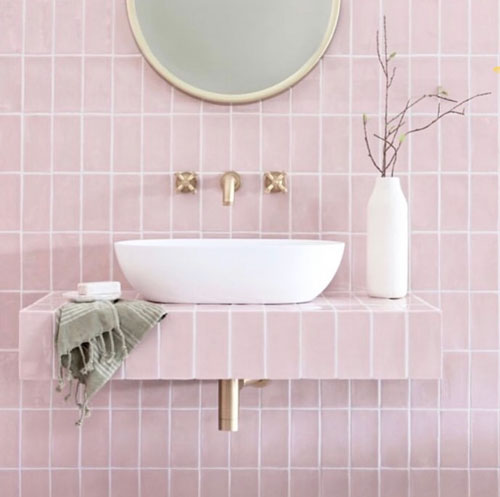
Stylish Sydney bathroom featuring pink fish scale tiles and gold tapware

Fish scale tiles are a statement and you kind of have to go in knowing that. The overlapping curved shape is bold and decorative and it works best when you give it one surface to shine on rather than spreading it everywhere. Feature walls, powder rooms and splashbacks are the sweet spot.

A powder room done in deep navy or forest green fish scale is genuinely one of the most striking things you can do with a small space. Architectural Digest has featured this exact combination in several powder room projects and it’s easy to see why. It’s a room people use briefly so you can afford to be a bit bolder with it. Brushed brass taps work really well with the richer tones. Have a look at our fish scale bathroom tiles guide for more on layout and sizing.

Styling tip: The size of the tile changes the whole vibe. Smaller tiles around 48mm feel traditional and a bit delicate. Larger formats at 95mm and above look more modern and graphic. Think about the size of the room when you’re choosing and generally a smaller tile in a smaller space and a bigger tile where the room can handle it.

Basketweave Tiles

Japandi style bathroom featuring Basketweave Carrara + Cinderella Grey Honed mosaic tiles with wooden bench and minimalist neutral décor.

Walk into a classic Sydney terrace bathroom and there’s a good chance the floor is basketweave. The interlocking rectangular tiles create that woven look and it gives floors a texture and warmth that plain square tiles honestly don’t have. It’s a familiar pattern but it never feels boring.

Works great in hallways and en-suites too, not just bathrooms. The classic version is white marble with small dark dot inserts at the intersections but an all-white version looks lovely if you want something a bit quieter. Martha Stewart has described basketweave as one of the few tile patterns that works equally well in both a heritage home and a contemporary renovation without needing much adjustment and that’s a pretty accurate take.

Styling tip: Let the floor be the thing. Basketweave pairs naturally with wall-mounted tapware and freestanding baths and it supports that heritage look without fighting it. Keep the walls simple, a plain large format tile or just painted render and the floor becomes the focal point which is exactly what you want.

Vertical Stack Tiles


tunning bathroom design with vertical stack mosaic tiles and subway tiles.

Vertical stack doesn’t look like much on paper but it punches above its weight in a real room. The idea is simple, rectangular tiles stacked straight up rather than offset and that continuous vertical line pulls your eye upward. Bathrooms that feel a bit low or cramped benefit from this more than almost any other pattern choice.

It’s also just a genuinely easy pattern to live with. No fuss, nothing competing for attention and it goes with pretty much any direction you take the rest of the room. Equally at home in a freshly renovated apartment as it is in a more traditional house.

Styling tip: Around 75x150mm is a good tile size for this layout and the elongated shape really suits the vertical run. Matte black tapware and a floating vanity alongside it and the whole bathroom feels put together without trying too hard. If you want to avoid it looking a bit flat, mix in a handful of tiles in a slightly different tone through the stack. It’s subtle but it makes a difference.

Diamond Mosaic Tiles

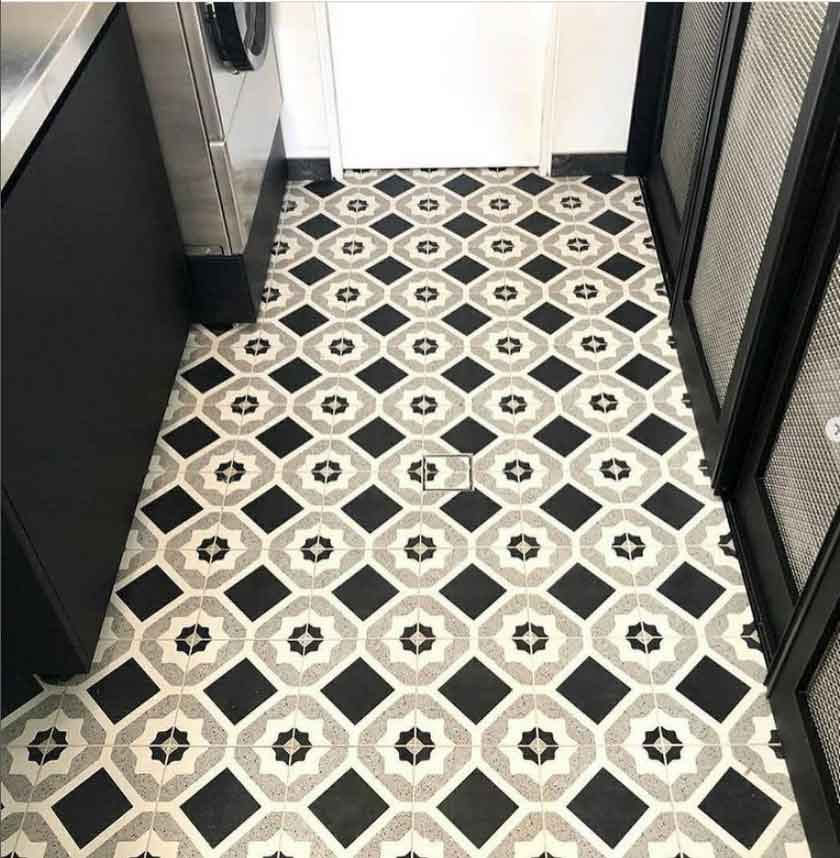
Diamond tiles are just squares rotated 45 degrees but that simple change makes a big difference. The diagonal grid creates movement and energy that an upright grid doesn’t have. They work well as a feature wall, on bathroom floors and in outdoor areas where you want something with a bit of visual punch.

A classic black and white diamond floor in a bathroom is hard to argue with. It’s graphic and timeless and because the floor is doing so much, you can keep everything else really simple. If all-black-and-white feels a bit stark, a tonal diamond in terracotta or sage is a softer take on the same idea.

Styling tip: If it’s going on a feature wall, keep the rest of the room calm. The diagonal is assertive and it needs room to breathe. In Sydney homes with outdoor areas, larger diamond porcelain in stone tones is a solid choice because it handles the sun and weather well.

Magazine and flower pot on white penny round mosaic tile floor Magazine and flower pot on white penny round mosaic tile floor mobile version

Slash prices, not your budget!

Enjoy savings of up to
50% on all the clearance items.

Brick Bond / Running Bond Tiles

Brick bond is the tile pattern most people grew up with and it’s popular for good reason. Each tile is offset by half from the row above and it creates a horizontal rhythm that feels easy and familiar. Works with pretty much any tile material, ceramic, marble, terracotta, zellige and it suits both traditional and contemporary spaces without much fuss.

On bathroom walls, it keeps things looking fresh and open, especially in longer subway-style tiles. In a kitchen splashback, it has a relaxed quality that works well in Australian open-plan homes where you want the kitchen to connect with the rest of the space rather than stand apart from it.

Styling tip: Try a 1/3 offset instead of the standard half offset. It’s a small change that looks a bit more considered and less default. If you can get your hands on handmade zellige for a kitchen splashback in this layout, do it. The slight surface variation in handmade tiles gives the pattern a life that machine-made tiles can’t really replicate.

Grid / Square Stack Tiles

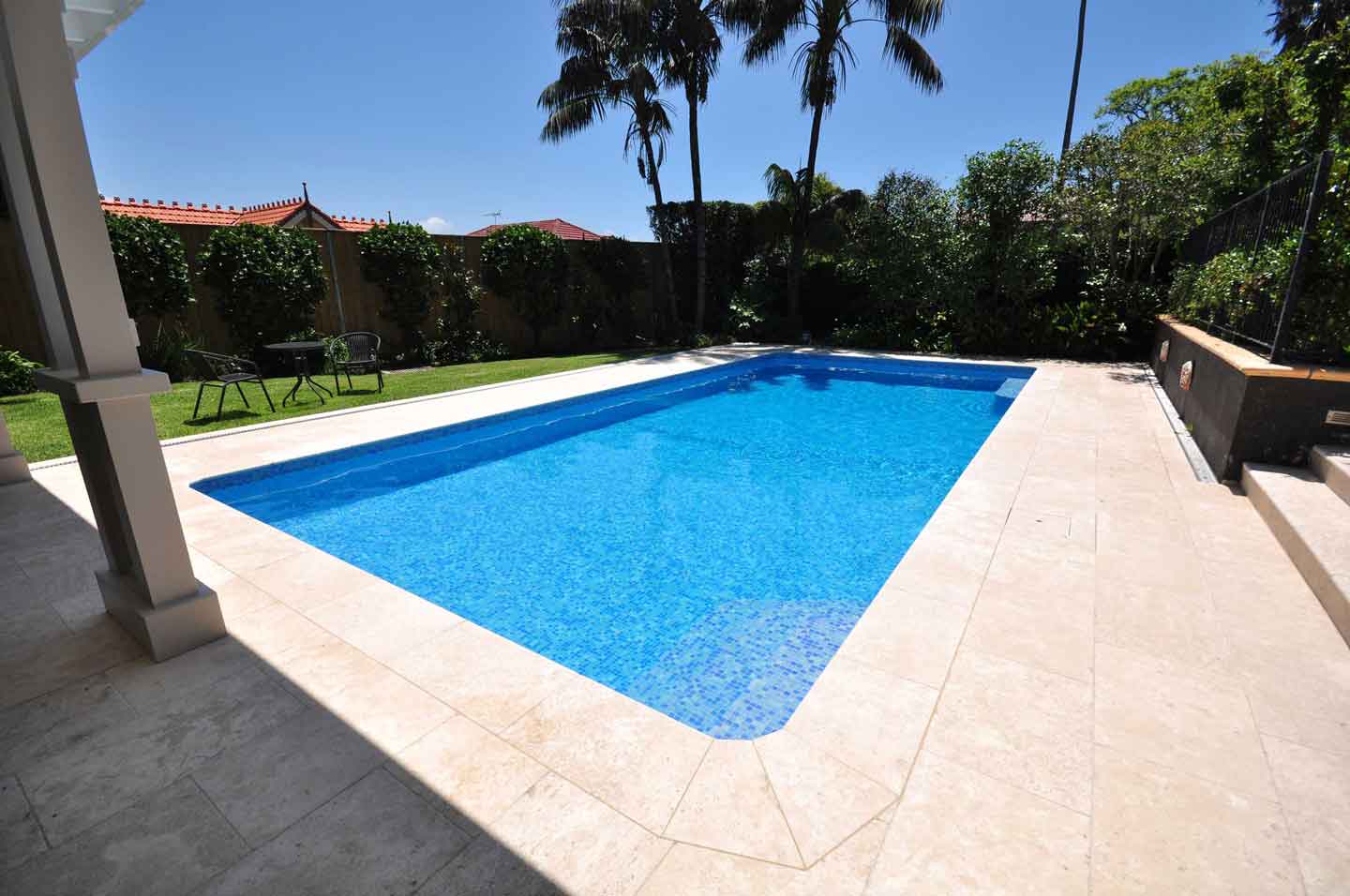
Sometimes simple is exactly right. A square grid is just tiles laid in a straight, aligned pattern and what that does is let the material itself be the main event. The pattern steps back and the colour, texture and finish of the tile take over. In pool surrounds, outdoor areas and contemporary bathrooms, that’s often exactly what you want.

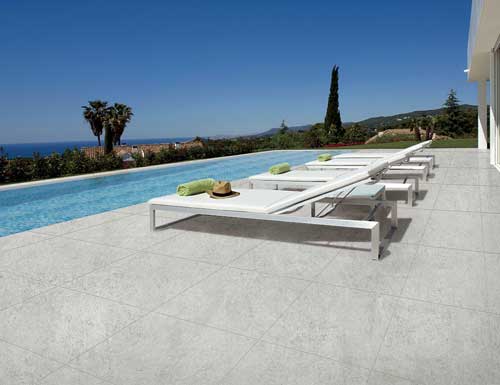
For outdoor pools a square grid in stone-look porcelain or travertine is practical and looks great without any fuss. In smaller period homes a mosaic grid in a tiny 25x25mm or 48x48mm format has a retro quality that feels really at home in federation terraces and older character houses.

Styling tip: Contrasting grout adds definition and makes the grid pattern really readable. Pale grey with white tiles or dark charcoal with a mid-tone stone both work well. If you want the surface to feel more seamless and contemporary, go with a matching grout. Both are valid just depending on what feeling you’re after.

Arabesque / Lantern Tiles

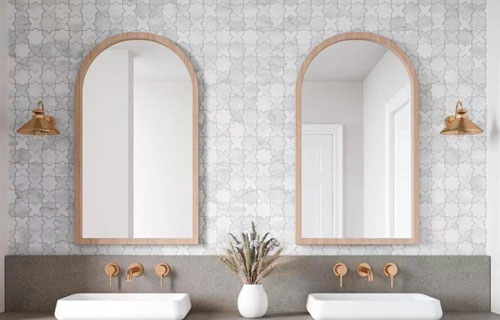
Arabesque tiles are the most decorative of the lot and they know it. The elongated pointed oval shape comes from Moorish and Mediterranean design and there’s a richness to it that more geometric patterns don’t have. They work best when given one surface to own, a feature wall, a powder room or a splashback behind a bath. Give them too much room and the effect gets diluted. Our Moroccan zellige tiles guide is worth a read for colourways and materials that work well alongside them.

In Sydney homes, a neutral palette tends to age better with arabesque than going bold. The shape itself is already interesting so creamy white, warm stone or pale sage lets it do its thing without the whole room feeling like it’s trying too hard. Architectural Digest has noted that arabesque tiles in warmer neutral tones photograph beautifully and translate just as well in person which is a good sign for long-term satisfaction with the choice. You can always add colour through plants, accessories and brassware and change it up over time.

Styling tip: One wall behind the vanity mirror with some warm-toned sconces on either side is a genuinely beautiful combination with arabesque tiles. The directional light picks up the shape in a way that overhead lighting never does. It’s one of those things that looks like a lot more effort than it actually is.

How to Choose the Right Mosaic Tile Pattern for Your Room

It doesn’t have to be complicated. Three questions usually sort it out.

Floor or wall? Floors have to work harder practically. Grip, grout cleaning and how the surface wears over time all matter more underfoot. Penny round, basketweave, diamond and grid are all solid floor choices. Walls give you more freedom and you can push the pattern a bit further without worrying about the practical side.

Feature surface or all-over? Fish scale and arabesque are the feature surface patterns. One wall, one niche, one splashback and they look great. Spread them everywhere and it gets overwhelming quickly. Herringbone, vertical stack and brick bond are patterns that can go all-over without the room feeling too busy, especially in smaller tile formats.

Classic or contemporary? Basketweave, penny round and brick bond are classic and they hold their value in Australian homes. Vertical stack, Kit Kat and Diamond feel more current. If you’re renovating to sell, the classic patterns are a safer bet. If it’s your forever home, go with what you actually love.

Ready to Choose Your Pattern?

The right pattern makes a bigger difference than most people expect and it doesn’t have to be a stressful decision. 

Contact or visit the Royal Tiles Auburn showroom at 255 Parramatta Rd, Auburn NSW, around 25 to 35 minutes from Sydney CBD. 

Request samples, or go through our tiles online.

Browse our full mosaic tile collection to see all ten patterns in a range of materials and finishes or book a free design consultation and we can help you figure out what works best for your Sydney home.

Frequently Asked Questions

What are some common mosaic patterns?

Herringbone, penny round, basketweave, fish scale, kit kat, diamond, vertical stack, brick bond, grid stack and arabesque. Those are the ten you'll come across most in Australian homes and they're all covered in detail above.

What is a mosaic pattern?

It's just the way tiles are arranged on a surface. Same tile, different layout and the room can look completely different. The pattern honestly has more impact on the finished space than most people realise when they're choosing tiles.

What are mosaic patterns called?

They're mostly named after what they look like, which makes them easy to remember. A few have more than one name though. Kit kat and finger tiles are the same thing and fish scale and scallop get used interchangeably. Either way most tile suppliers will know what you mean.

How do you choose a mosaic tile pattern for your room?

Floor or wall, feature surface or all-over and classic or contemporary. Answer those three and it usually becomes pretty obvious. The How to Choose section above maps it all out if you want a bit more guidance.

What mosaic tile pattern is best for a small bathroom?

Vertical stack is a really good one because the vertical lines make the ceiling feel higher than it is. Likewise, penny rounds work well because it adds texture without making a small space feel cluttered. Both are popular choices in Sydney apartments for exactly that reason.

Peter Yusuf - Royal Tiles

Peter Yusuf

linkedin

Peter Yusuf is a seasoned Sales and Business Development Manager at Royal Tiles in Sydney, Australia, with a proven track record of success in the global architectural and interior design sectors. With over a decade of experience, he possesses a rich understanding of tile selection and design that has helped countless clients transform their spaces. Peter's expertise spans a wide array of materials and styles, positioning him as a trusted authority in the tile industry.

Half Wall vs Floor to Ceiling Bathroom Tiles:<br> How High Should You Tile?

Half Wall vs Floor to Ceiling Bathroom Tiles:
How High Should You Tile?

October 8, 2026

Planning an exciting pinterest worthy tile reno for your bathroom, shower area, or powder room? Styling these rooms comes with…

Sydney Tile Guide: New Builds, Renovations and Extensions

Sydney Tile Guide: New Builds, Renovations and Extensions

September 24, 2026

Building from scratch, renovating a bathroom or extending the back of your home? Each calls for a different approach to…

Porcelain Slabs: The Complete Guide to Large Format Tiles

Porcelain Slabs: The Complete Guide to Large Format Tiles

September 18, 2026

Porcelain slabs are large-format porcelain tiles designed to create a spacious look with fewer grout joints. Available dimensions vary by…

Call Now