Which Tiles are you looking for?

Fill out the form and we will contact you.
Let's find your perfect tile!

Porcelain Pavers vs Travertine vs Concrete Pavers:
An Australian Buyer’s Guide

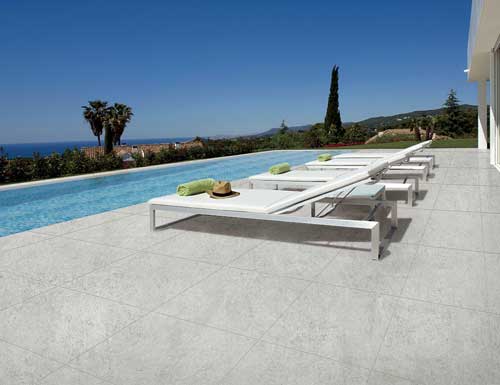
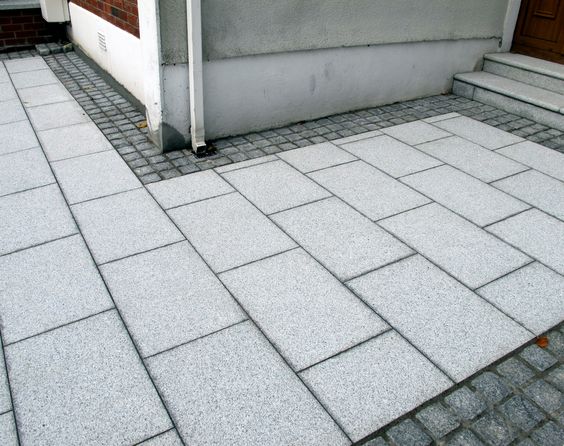
Light grey porcelain pavers in a contemporary outdoor patio setting for Australian homes.
Peter Yusuf

What Each Material Actually Is

Comparison infographic showing porcelain pavers vs travertine vs concrete pavers, including origin, aesthetics, durability, performance and material properties for Australian outdoor paving projects.


These are three genuinely different materials, not three finishes of the same base product. That distinction matters before you start comparing price and performance.

Porcelain is engineered. Clay goes into a kiln at very high temperatures and comes out dense, hard and consistent. Every piece matches the next in colour, texture and dimension. That consistency is what suits it to large outdoor areas where variation would be a problem rather than a feature.

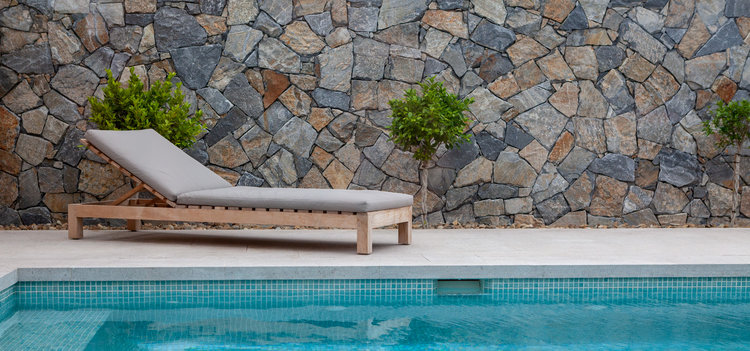
Travertine is a natural stone from the limestone family. Each piece carries its own tonal variation, surface movement and character. Our customers who choose travertine usually do so because they want that variation, like the kind of warmth and depth that a controlled manufacturing process cannot replicate. It tends to stop people in the showroom in a way that engineered materials rarely do.

Concrete is cast from cement in moulds. It is widely available, budget-friendly and functional. It is not competing with the other two on appearance or longevity and is best understood on those terms.

For more on how natural stone performs in Australian conditions, our Natural Stone Tiles overview covers the key considerations before you commit.

Appearance and Style

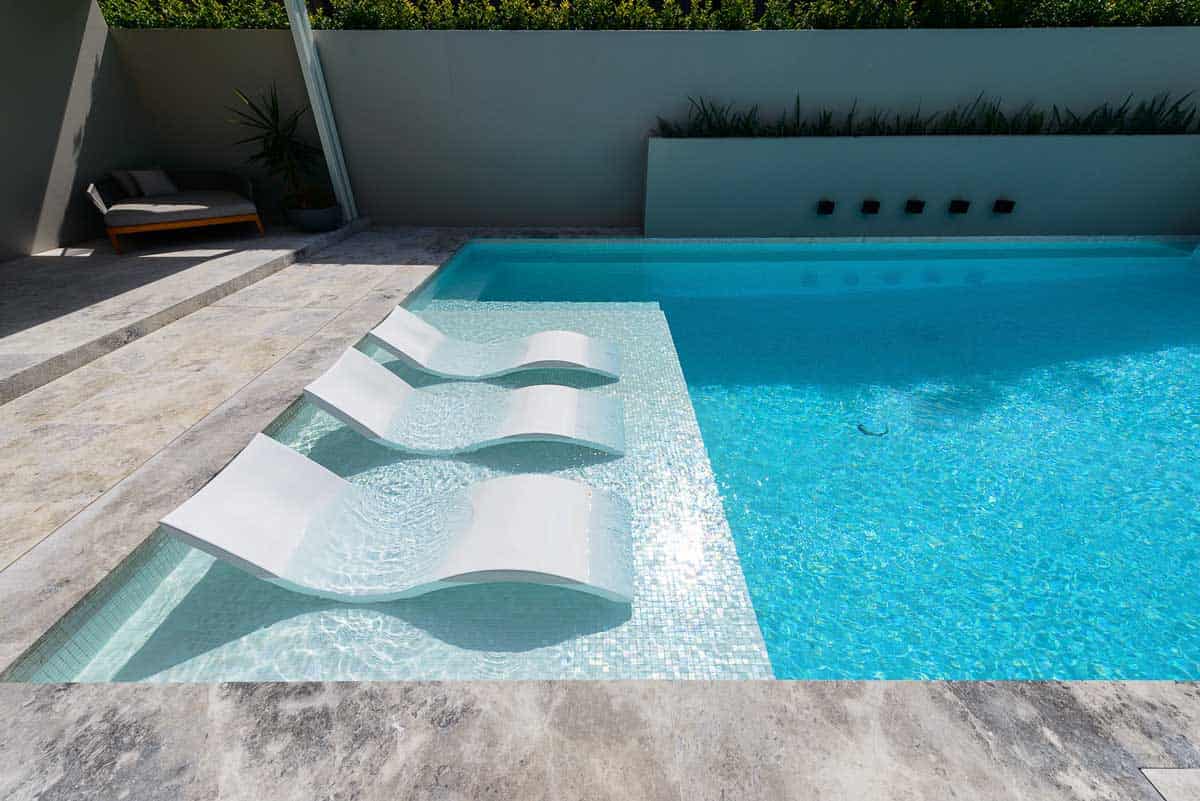
Large format porcelain pavers in a modern outdoor alfresco entertaining area with outdoor kitchen and pool at a Sydney home.

Porcelain pavers are available in stone, concrete, timber and marble looks, all with a surface consistency that natural materials cannot replicate. The colour and texture are even across the whole area, which suits modern and contemporary homes particularly well. Large-format porcelain in outdoor settings creates a visual clarity that our customers often describe when they first walk into the showroom. They know the look they want but are not always sure which material produces it. Seeing the 600×1200 and 800×800 format options in person tends to settle the question quickly.

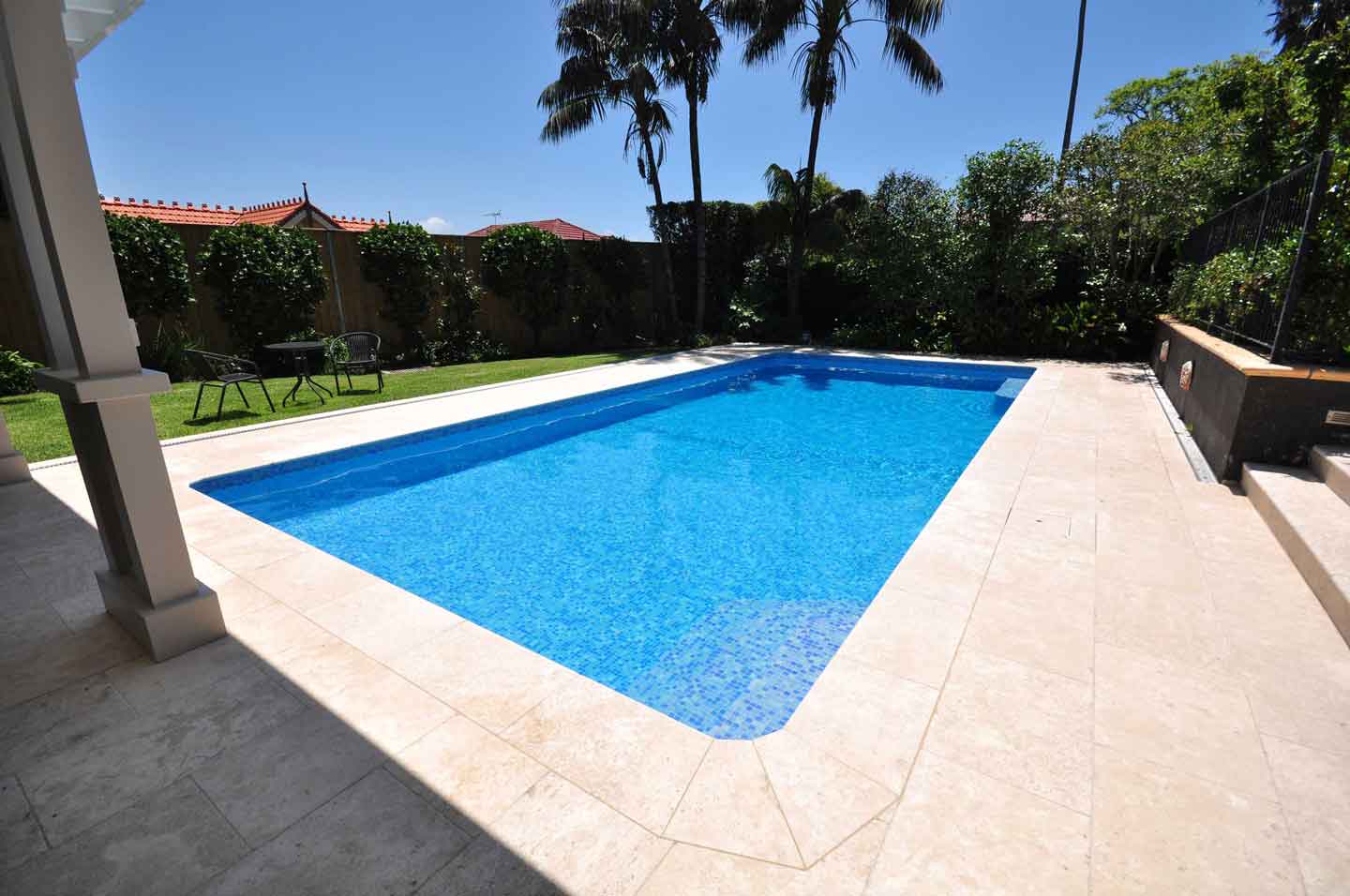
Travertine pavers bring a warmth that engineered materials rarely replicate convincingly. The cream, ivory, walnut and gold tones, combined with the natural variation between pieces, suit Mediterranean-style gardens, Hamptons-style homes and pool surrounds where an organic, natural feel is part of the design brief. The visual quality of travertine around water is part of why it has held its place in Sydney outdoor design for as long as it has.

Concrete pavers carry a utilitarian quality that can suit industrial or minimal design styles, but standard concrete paving tends to look dated faster than either of the alternatives. The limited finish range and the way concrete weathers under sustained Australian sun, developing an uneven mottled surface over time, are worth factoring in if the area is high-visibility or if resale value is part of the calculation.

Browse our Porcelain Pavers and Travertine Tiles collections to compare formats and finishes before you decide on a direction.

Durability and Performance in Australian Conditions

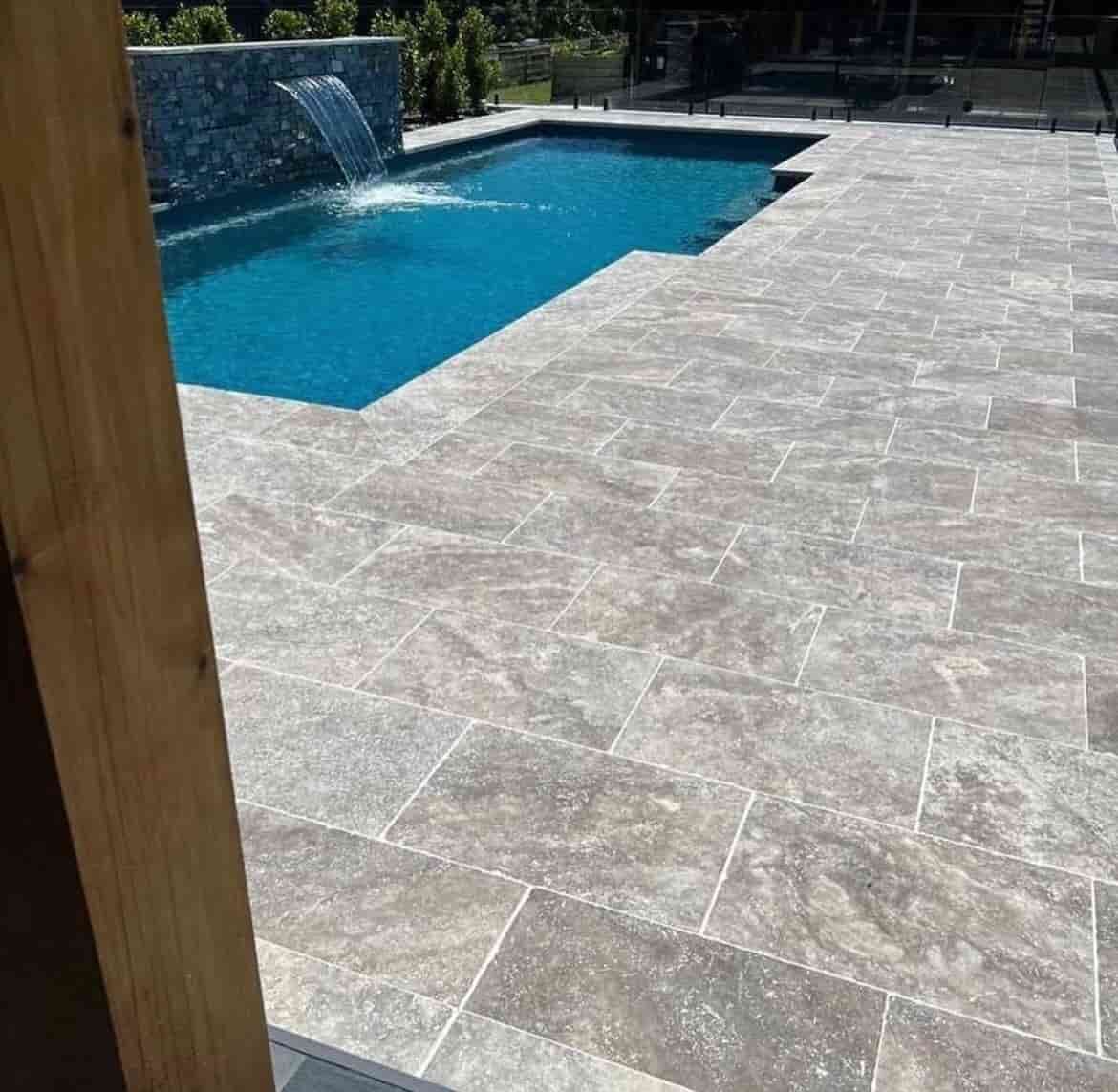
Travertine-look porcelain pavers around a modern pool surround in Australia, designed for long-term UV and weather resistance.

Australian outdoor surfaces face full sun for extended periods, temperature variation between seasons, pool chemicals, coastal humidity and occasional hard frosts in inland areas. Here is how each material handles those demands.

Porcelain Pavers

Quality porcelain pavers have a water absorption rate below 0.5 per cent. That figure matters because it means pool chemicals, rain, organic matter and surface staining have almost no pathway into the material. Porcelain does not require sealing at installation or at any point afterwards. UV exposure does not cause fading. It holds up under normal Australian temperature cycling without cracking. The customers we see most often with outdoor paving problems are rarely the ones who chose porcelain for the job. For instance, staining around pool edges, surface degradation and cracking in exposed areas.

Travertine Pavers

Travertine is a durable stone with a long track record in outdoor applications across climates similar to coastal Australia. It performs well outdoors when maintained correctly. The requirement is sealing on installation and resealing every one to three years, depending on traffic and exposure. Unsealed travertine in a pool environment will absorb pool chemicals and chlorinated water over time, which leads to surface deterioration and staining. This is not unique to travertine as a material. It is simply the nature of porous natural stone, and it is a commitment that needs to be part of the decision.

Unfilled travertine has natural voids in the surface that accumulate debris. Filled and honed travertine removes that issue, though the sealing requirement applies to both finishes equally.

Concrete Pavers

Standard concrete pavers perform adequately in stable conditions but have three weaknesses in Australian outdoor applications. They are prone to cracking in areas with ground movement. They fade and develop surface mottling under sustained UV exposure. And they require sealing to maintain stain resistance. Around pools or in full-sun alfresco areas, concrete pavers tend to look noticeably weathered within five to seven years in a way that travertine and porcelain generally do not.

Slip Resistance and Safety

This section matters most for pool surrounds, alfresco areas and any outdoor surface that gets wet regularly. Under Australian Standard AS 4586, slip resistance for outdoor wet areas is rated on a P scale. Pool surrounds and wet alfresco areas generally require a minimum P3 rating and P4 is the appropriate specification for surfaces with direct water exposure.

Porcelain pavers are available in P3 and P4 rated options, but not all porcelain pavers carry an outdoor slip rating. Specifying the slip rating when ordering is essential, not optional. Our team can confirm the slip rating of any product in our range before you purchase. Your tiler can advise on the right specification for your specific area.

Travertine pavers in a textured or tumbled finish offer good natural grip. The irregular surface provides traction on wet ground. Honed travertine has a smoother finish and lower slip resistance, so the finish choice needs to match the application rather than just the aesthetic preference.

Concrete pavers with an exposed aggregate finish are among the grippiest outdoor surfaces available and suit areas where slip resistance is the primary concern. Plain or broom-finished concrete can be slippery when wet and is not a suitable choice for pool surrounds without additional surface treatment.

For the full range of anti-slip rated outdoor options, see our Outdoor Tiles collection.

Maintenance and Cleaning

Porcelain Pavers

Routine maintenance for porcelain pavers in most outdoor applications is a sweep and a hose. No sealant is required. No specialised cleaning products are needed. For heavily soiled areas, a mild neutral-pH cleaner and a scrubbing brush handle anything residual. This is the practical difference our customers most consistently tell us they underestimated when weighing up porcelain against natural stone. Over five or ten years, the gap in time, cost and effort is significant.

Travertine Pavers

Travertine requires pH-neutral cleaners only. Acid-based products, vinegar and many common outdoor cleaning sprays will etch the surface and damage the stone. Resealing is required on a schedule that depends on the exposure level. An annual seal is appropriate for travertine adjacent to pools or in high-traffic areas. Biannual resealing suits lower-exposure surfaces. Unfilled travertine may also need occasional refilling of voids as they accumulate debris over time. For someone who has chosen travertine for its character and is committed to the material, this maintenance is manageable. It is, however, a genuine ongoing responsibility.

Concrete Pavers

Weed growth in the joints of concrete paving is a common issue when the bedding and jointing is not done correctly on installation. Resealing every two to three years helps maintain stain resistance. Pressure washing is effective for surface cleaning but it will degrade the finish if used at high pressure over time. Efflorescence, the white salt bloom that appears on new concrete, is a common issue in the first year or two and can return after heavy rain.

The maintenance difference between porcelain and the other two options is the clearest practical argument for porcelain in most Australian outdoor applications.

Cost Comparison

Concrete pavers carry the lowest upfront cost and are the most accessible option through landscaping suppliers and hardware stores. For budget projects and utility areas, accessibility is a genuine advantage.

Travertine pavers sit in the mid-range for upfront cost and represent a meaningful investment for the aesthetic return. The ongoing maintenance cost needs to be factored in separately. Sealing products, professional resealing every one to two years and any repair work over ten years add to the total spend in ways that the purchase price alone does not reflect.

Porcelain pavers represent a mid-to-premium upfront investment depending on format and finish, with very low ongoing costs. When our customers work through the full lifetime cost rather than the per-square-metre purchase price, the gap between porcelain and the alternatives narrows considerably. For pool surrounds, alfresco dining areas and any surface that is heavily used and highly visible, porcelain frequently represents better value over the life of the space.

We do not publish per-square-metre pricing here as it varies by product, format and availability. Our team takes the time to understand your specific project before giving you an accurate indication, so there are no surprises on either format or cost.

Bishal and his team when above and beyond in assisting me with the selection of tiles, grout and adhesive. No request was too hard and they were very patient with all my questions. Delivery was on time and bathrooms look amazing. Will definitely be returning for future projects.

Rozy Dorizas

Rozy Dorizas

  • ★
  • ★
  • ★
  • ★
  • ★

Book a free design consultation or visit us in the showroom and we can work through the numbers with you based on your actual project.

Best Uses for Each Material

Outdoor paving selection guide comparing porcelain, travertine and concrete pavers for patios, pool surrounds, gardens and utility areas in Australia.

Porcelain Pavers

Pool surrounds, alfresco areas, patios, balconies and driveways where low maintenance and a modern finish are the priorities. Porcelain also suits any project where a continuous look from inside to outside is part of the design brief. Using the same tile format across the threshold removes the visual break between the interior and the outdoor area, which makes both spaces read as larger. 

See the full Porcelain Pavers range for the formats available.

Travertine Pavers

Pool surrounds, garden paths and outdoor entertaining areas in Mediterranean, coastal or Hamptons-style homes where a warm, natural aesthetic is the design direction. Travertine rewards the maintenance commitment with a character that deepens over time rather than degrading. 

Our Travertine Tiles range includes filled and unfilled options across several tone groups.

Concrete Pavers

Driveways, side passages, budget garden paths and utility areas where function is the priority and the surface receives limited foot traffic or visual attention.

For pool-area paving specifically, our Pool Tiles and Outdoor Tiles ranges show the options suited to that environment in detail.

Porcelain Pavers vs Travertine vs Concrete Pavers: Three-Way Comparison

Feature
Porcelain Pavers
Travertine Pavers
Concrete Pavers
Appearance
Consistent, modern finish across all pieces
Warm, organic variation between pieces
Functional with a limited finish range
Durability
Excellent
Good when sealed
Moderate
Maintenance
Very low. No sealing required
High. Regular sealing required
Moderate. Occasional sealing required
Slip Resistance
P3 and P4 options available. Specify on order
Good in tumbled or textured finish
Good in exposed aggregate finish
Pool Safe
Yes
Yes when sealed correctly
Yes
UV and Fade Resistance
Excellent
Good
Moderate. Surface mottling develops over time
Upfront Cost
Mid to premium
Mid
Budget to mid
Lifetime Cost
Low
Medium. Ongoing maintenance adds up
Medium

See the Difference in Person

Reading about materials gets you part of the way. Seeing them side by side in the showroom and comparing how they look in real light is what usually settles it for our customers.

Visit us at 255 Parramatta Road Auburn or our Lidcombe showroom to view our Porcelain Pavers and full Outdoor Tiles range in person. 

We work with homeowners across Sydney, Padstow, Alexandria and throughout NSW.

If you would prefer to compare materials at home first, order samples and we will get them to you.


Magazine and flower pot on white penny round mosaic tile floor Magazine and flower pot on white penny round mosaic tile floor mobile version

Slash prices, not your budget!

Enjoy savings of up to
50% on all the clearance items.

Frequently Asked Questions

Are porcelain pavers better than travertine for pool areas?

For most pool surrounds in Sydney homes, porcelain is the more practical call. It handles pool chemicals and constant moisture without any sealing and comes in P3 and P4-rated finishes for the wet zone. Travertine can absolutely work around a pool and it looks beautiful when it does, but it needs to be sealed before it goes near water and resealed on a regular schedule after that. Our customers who choose travertine for a pool surround are usually the ones who have heard that from us, understood it and decided the aesthetic is worth the upkeep. If someone asks us which one requires less from them over time, the answer is porcelain.

Do porcelain pavers need to be sealed?

No. Porcelain has a water absorption rate below 0.5 per cent, which means moisture, pool chemicals and surface staining have almost no way in. There is nothing to seal against. This is one of the questions we get most often in the showroom, usually from customers who have been told by someone that all outdoor pavers need sealing. For porcelain, that is simply not the case.

How long do concrete pavers last in Australia?

The material itself can last 20 to 30 years in stable ground conditions. The more honest answer for most outdoor areas is that the appearance deteriorates well before that. Australian UV exposure causes fading and surface mottling, and any ground movement introduces cracking. By the five-to-ten-year mark on a full-sun patio or around a pool, concrete pavers often look considerably more worn than either porcelain or travertine of the same age.

What is the most low-maintenance outdoor paving option?

Porcelain. A sweep and a hose cover routine cleaning in most outdoor applications. No annual sealing, no pH-specific cleaning products, no refilling of voids. This is the maintenance gap our customers most consistently tell us they did not fully account for when they were deciding between porcelain and natural stone.

Can you use porcelain pavers around a pool in Australia?

Yes. Porcelain is one of the most suitable materials for Australian pool surrounds. It resists pool chemicals, UV exposure and moisture without sealing and is available in P3 and P4 slip-rated options for wet areas. Specify the required slip rating when ordering and ask your tiler to confirm suitability for your specific pool environment.

What slip rating do I need for outdoor pavers in Australia?

Under Australian Standard AS 4586, P3 is the general minimum for outdoor wet areas and P4 is recommended for surfaces with direct water exposure such as pool surrounds. Your tiler can advise on the right specification for your application. Our team can confirm the slip rating of any product in our range before you purchase.

Peter Yusuf - Royal Tiles

Peter Yusuf

linkedin

Peter Yusuf is a seasoned Sales and Business Development Manager at Royal Tiles in Sydney, Australia, with a proven track record of success in the global architectural and interior design sectors. With over a decade of experience, he possesses a rich understanding of tile selection and design that has helped countless clients transform their spaces. Peter's expertise spans a wide array of materials and styles, positioning him as a trusted authority in the tile industry.

Sydney Tile Guide: New Builds, Renovations and Extensions

Sydney Tile Guide: New Builds, Renovations and Extensions

September 24, 2026

Building from scratch, renovating a bathroom or extending the back of your home? Each calls for a different approach to…

Porcelain Slabs: The Complete Guide to Large Format Tiles

Porcelain Slabs: The Complete Guide to Large Format Tiles

September 18, 2026

Porcelain slabs are large-format porcelain tiles designed to create a spacious look with fewer grout joints. Available dimensions vary by…

Flower Tiles: <br>A Complete Guide to Floral Mosaic & Daisy Tiles

Flower Tiles:
A Complete Guide to Floral Mosaic & Daisy Tiles

August 28, 2026

Flowers like daisies are a beautiful embodiment of new beginnings, cheerfulness, true love and purity. If you are in your…

Call Now