
Porcelain Tiles vs Concrete Look Tiles: What’s the Difference?

Porcelain tiles vs concrete look porcelain tiles in a modern interior design comparison.
Peter Yusuf

Here is where customers get confused. Concrete look tiles are porcelain tiles designed to resemble concrete. So when you are comparing porcelain versus concrete, you are often comparing porcelain versus porcelain that looks like concrete. Not two different materials. Two different aesthetic directions made from the same base product.

What you actually want to know is whether you should go for plain porcelain finishes or commit to the concrete aesthetic. And whether that concrete look will still feel current in five years or date your home the way exposed Edison bulbs dated kitchens. We have seen both outcomes in Sydney renovations and the difference almost always comes down to how well the tile fits the rest of the interior rather than the tile itself.

If you are still in the early stages of deciding whether porcelain is right for your project, the porcelain tile range covers the full category before you get into style comparisons.

This blog covers both options side by side, explains which concrete looks have staying power and helps you figure out whether the industrial direction suits your home or whether you are chasing a trend that will not age well.

What Are Porcelain Tiles?

Porcelain is made from dense, fine-grained clay fired at higher temperatures than standard ceramic. That process produces a tile with very low porosity, typically a water absorption rate below 0.5%, which is the industry benchmark for porcelain classification. It handles wet areas, outdoor exposure and daily spills without absorbing moisture or breaking down over time. For Sydney homes and renovations, that matters whether you are tiling a bathroom, an alfresco or a kitchen floor.

Porcelain comes in matte, polished, honed and lappato finishes. Lappato sits between matte and full gloss, a semi-polished surface that diffuses light rather than reflecting it cleanly. It can convincingly replicate stone, marble, timber and concrete. That last one is where concrete look tiles come in.

The full porcelain range is available online. Filter by finish and format to narrow it down before visiting. If you are weighing up polished versus matte specifically, our guide to polished vs matte porcelain tiles covers that decision in more detail.

What Are Concrete Look Tiles?

Concrete look tiles are porcelain tiles with a finish engineered to replicate raw or polished concrete, including the slight tonal variation and surface texture that makes the aesthetic work. They are not poured concrete and they do not carry any of the maintenance requirements of real concrete floors.

Colours run from cool charcoal and blue-grey through to warm beige and off-white, with most products sitting in that mid-grey range that has been dominant in Sydney renovations for the last few years. The finishes lean matte or lappato because that is what suits the look. Polished concrete look tiles exist, but most customers after that raw understated effect, want the matte version.

This tile type works particularly well in industrial, Japandi, minimalist and contemporary interiors. If you have walked into a Sydney cafe or a newly renovated home and noticed that quiet, pared-back quality to the floor, concrete look tiles are usually what is producing it.

The current concrete look range is on the website. If you want to see how the tones read in person before committing, the showroom carries most of the popular formats. If you are also weighing up stone-based aesthetics, stone-look tiles share many of the same technical qualities but give a very different result. 

For a side-by-side comparison of concrete look versus terrazzo styles, see our terrazzo vs concrete look tiles guide.


Key Differences at a Glance:


Criteria
Standard Porcelain
Concrete Look Porcelain
Material
Porcelain
Porcelain
Finishes available
Matte, polished, honed, lappato
Matte, lappato (primarily)
Slip resistance
Lower on polished finishes
Better on matte finish
Design flexibility
High like can be in marble, stone, timber, plain
Specific like industrial, Japandi, minimalist
Sealing required
No
No
Outdoor-rated options
Yes. Check P rating per product
Maintenance
pH-neutral cleaner, regular sweep and mop
Price range
Similar across both categories
Best suited to
Mixed interior directions, multiple rooms
Modern, minimalist or industrial interiors

Price sits in a similar range across both categories. Where cost differences exist, they are driven by tile format, finish quality and brand rather than any material distinction.

Appearance, Design Style and the Decision That Actually Trips People Up

Standard porcelain gives you the widest design range in tile form. Marble veining, stone textures, warm timber looks, plain neutrals. If you are tiling across multiple rooms that do not share the same aesthetic, or you are not locked into one direction yet, that flexibility has real value. A change in furniture, a new kitchen bench, a repaint and a neutral stone-look porcelain hold up through all of it. Concrete looks harder to redirect around.

Because the concrete look is specific. It works well in modern, minimalist, industrial and Japandi interiors. What it is not is adaptable across every style direction. If the rest of the interior shifts over time towards something warmer or more traditional, a concrete look floor starts working against the room. That is the version that ages poorly. Not because the tile is bad but because the rest of the house moved on and the floor could not.

We had a customer earlier this year renovating a terrace house in Balmain. Open-plan living and dining, contemporary brief. They were torn between a large-format warm marble-look porcelain and a charcoal concrete look tile. The marble-look was genuinely beautiful, but when we looked at the rest of the interior, dark joinery, black tapware and linen upholstery, the marble-look would have clashed once everything was in. They took the samples home, checked both against the joinery in natural light and came back to confirm the concrete look. The right call. It took seeing it in the room to be certain, which is why we always recommend ordering tile samples before committing to any large purchase.

One more thing that most customers do not consider until after the job is done: grout colour. With concrete look tiles specifically, it makes a significant difference to the finished result. A charcoal tile with light grout reads as a visible grid across the floor. The same tile with a closely matched dark grout reads as one continuous surface. If you want the seamless raw concrete effect, match your grout tone to the tile as closely as possible. It is a small decision with a big visual impact. Our grout colour guide covers this in full if you want to go deeper on that decision.

Large format porcelain options, grey tile ideas and living room tile ranges are all available online if you want to compare formats and tones before visiting.

Durability and Performance

Because both are porcelain, the technical profile is the same. Low porosity means stain resistance, moisture resistance and frost resistance. Neither requires sealing, neither will absorb spills if wiped promptly and neither deteriorates in wet areas the way natural stone or softer tiles can.

Concrete look tiles have a practical edge in slip resistance. The matte, lightly textured surface offers better grip than high-polish porcelain, which matters for bathrooms, wet areas and households with young children or older adults. For a full breakdown of what slip ratings mean for different areas of your home, the slip-resistant tiles guide is worth reading before you buy.

Scratch resistance also plays differently between finishes. A scuff that shows clearly on a mirror-finish tile disappears into the surface texture of a matte concrete look tile. For a busy kitchen floor or high-traffic living area, that is a genuine reason to favour matte.

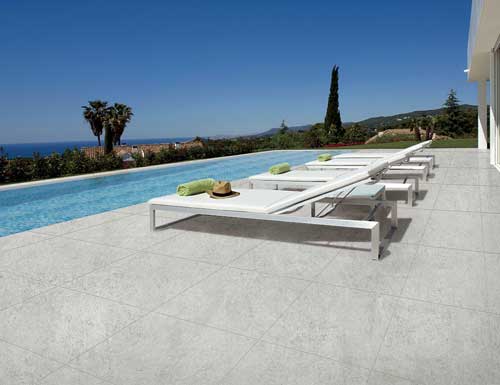
For outdoor use, both tile types can work. The requirement in Australia is a minimum P3 slip rating for general outdoor areas and P4 or higher for pool surrounds and areas that see heavy rainfall. Check the product spec sheet before purchasing for any outdoor application. The outdoor tile range lists products rated for Australian conditions. Confirm the spec before ordering.

Where Each Tile Works Well and Where the Choice Gets Harder

Bathrooms

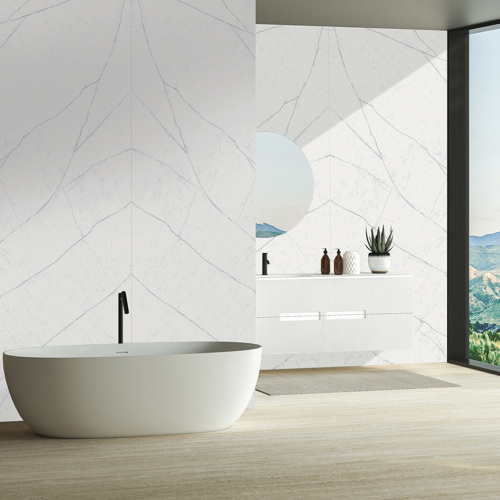
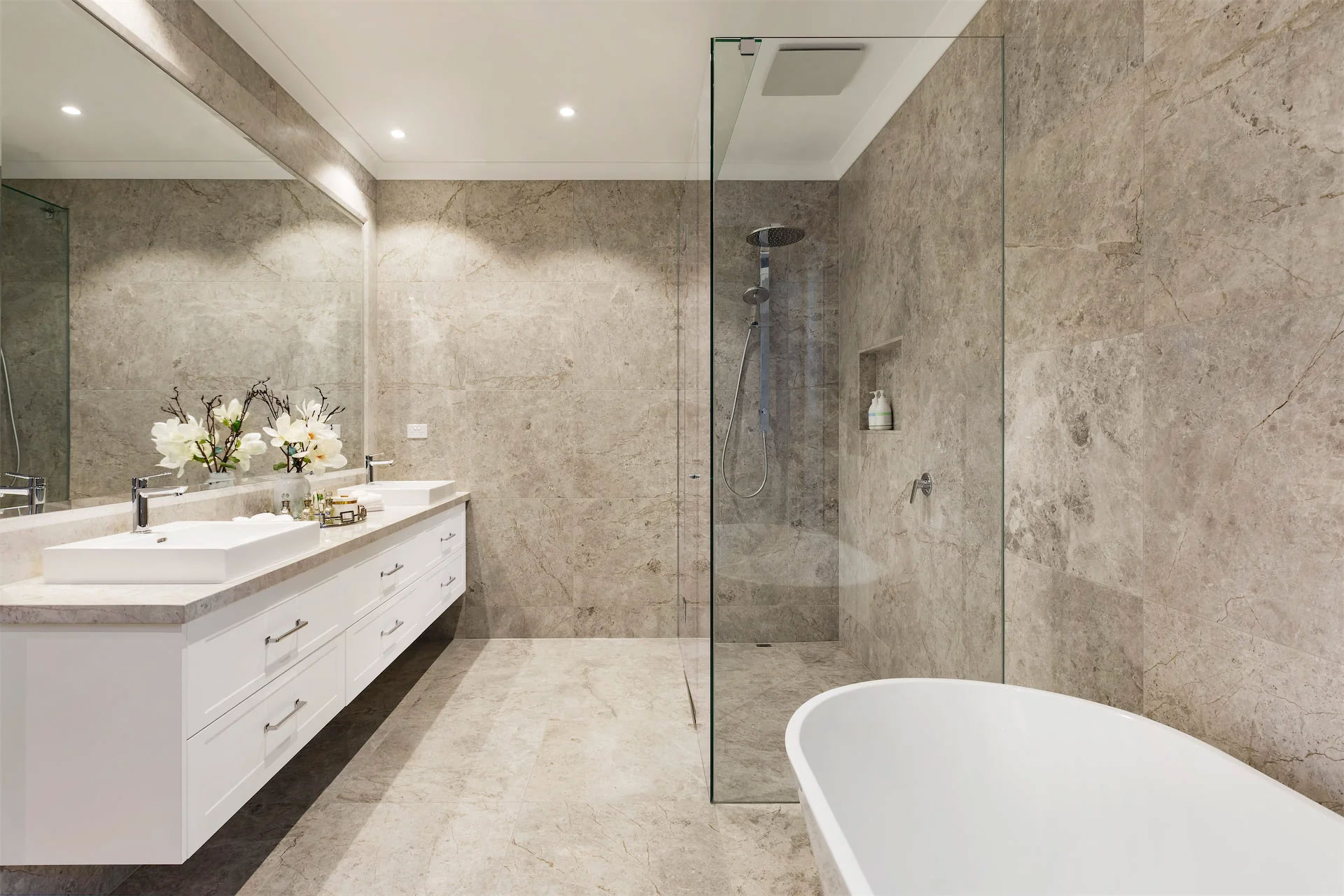
Both tile types work without any real trade-off. The matte finish on most concrete look tiles handles wet areas well and the slip resistance is better than polished porcelain. For a smaller bathroom, a warm beige or off-white concrete look tile in a large format keeps the floor from feeling broken up. The bathroom tile range covers both directions if you want to compare finishes online first. For floor-specific options, bathroom floor tiles narrow it down further.


Open-plan living areas

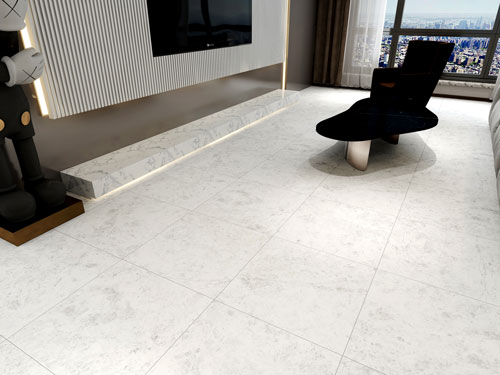
This is where the concrete look has made its biggest mark in Sydney right now. Large-format concrete look tiles on a living and dining floor create one continuous reading across the space. That is the specific reason they have become popular in that application, not just because they look good in isolation. If the design direction for the living area is less defined, standard porcelain gives you more to choose from. The living room tile range covers both concrete look and standard porcelain if you want to compare options side by side. The living room photo gallery shows how both look in completed spaces.


Kitchens

The choice is genuinely even here. Concrete look pairs well with handleless cabinetry, raw timber and black fixtures. Standard porcelain in a stone or plain finish works across a wider range of kitchen styles. Kitchen tile options across both categories are on the website. For floor-specific choices, kitchen floor tiles filter down to the right products.


Outdoors

Slow down and check the spec sheet regardless of which direction you are going. The tile needs to carry a P3 slip rating minimum for general outdoor areas and a P4 for pool surrounds or areas that see heavy rainfall. That requirement applies to both categories equally. The outdoor tile range includes products rated for Australian conditions. If you are also tiling a pool area, check the pool tiles range separately as the requirements are more specific. Confirm the rating before ordering.


Commercial fit-outs

Concrete look has become the default for cafes, offices and retail in Sydney. The matte surface holds up under heavy foot traffic, it cleans easily and the aesthetic works across a wide range of interior directions without needing to match anything specific. The commercial tiles range covers products suited to higher-traffic applications.

Maintenance and Cleaning

Real poured concrete floors need periodic sealing, are susceptible to cracking as the substrate moves beneath them and stain if spills are not caught quickly. Concrete look porcelain has none of those problems.

For both tile types, a regular sweep and mop with a pH-neutral cleaner is the full maintenance routine. No sealing, no specialist products, no resurfacing.

One honest note on colour choice: lighter matte concrete look tiles in warm beige and off-white tones show dust and pet hair more readily than mid or dark grey options. They look genuinely good in the right space. But if you have pets or a busy household, factor that into the decision before committing to a pale tone. A mid-grey handles daily life considerably more forgivingly.

Cost

Standard porcelain and concrete look porcelain sit in a similar price range. Format, finish and brand drive the cost differences. For current pricing on specific products, order samples or visit the showroom directly. Pricing shifts with availability and it is better to confirm before planning your budget around a figure from an online comparison.

For context, real poured concrete floors are significantly more expensive than either tile option and carry the ongoing maintenance obligations above. Concrete look porcelain gives you the visual result at a lower total cost and without the upkeep.

Which One Is Right for Your Space?

Go with concrete look tiles if your interior is heading in a modern, Japandi, industrial or minimalist direction. The matte finish is practical and the look holds up well in the right home. No sealing, no cracking and no upkeep that comes with poured concrete.

Standard porcelain suits you better if the interior direction is not fully locked in. The range is broader, marble, stone, timber, plain neutrals and it holds across multiple rooms that do not share the same style. If the space changes over time, a neutral porcelain finish changes with it. Concrete look does not have that flexibility.

Both options are porcelain. You are choosing a look, not a different material.

See the Difference in Person

Most of our customers make this decision easier than they expect once they are standing in front of the actual tiles. The mid-grey that looks too dark on a screen often reads completely differently against your joinery tone and the warm beige that seems safe online can pull yellow under certain light conditions. Ordering samples fixes that.

Royal Tiles Auburn: 255 Parramatta Rd, Auburn NSW 

Royal Tiles Lidcombe: 25 to 35 minutes from Sydney CBD

Check the tiles in your actual light conditions before committing. Or if you are further along in the decision and want to compare options properly, book a free design consultation and bring photos of the space. Note the joinery and tapware tones if you can. That is usually enough to narrow it down quickly.

We work with homeowners across Sydney, Campbelltown, Seven Hills and throughout NSW.

Magazine and flower pot on white penny round mosaic tile floor Magazine and flower pot on white penny round mosaic tile floor mobile version

Slash prices, not your budget!

Enjoy savings of up to
50% on all the clearance items.

Frequently Asked Questions

Are concrete look tiles the same as porcelain tiles?

Concrete-look tiles are porcelain tiles designed to resemble concrete. So when you are comparing porcelain versus concrete look, you are often comparing porcelain versus porcelain that looks like concrete. Not two different materials. Two different aesthetic directions made from the same base product.

Are concrete look tiles good for bathrooms?

They are one of the more popular choices for bathroom renovations in Sydney right now. The matte finish handles wet areas well and the grip tends to be better than polished porcelain. Check the slip rating on the specific product before purchasing, as it varies across the range.

Do concrete look tiles show dirt easily?

Mid-greys and darker tones handle daily life well. The lighter beige and off-white options are more demanding in a busy household, especially with pets. If a pale tone appeals to you, order a sample and live with it in your space for a few days before committing. Dust reads very differently on a tile sample sitting on your bench versus the same tile across an entire floor.

What is the difference between concrete look tiles and real concrete floors?

Real poured concrete needs periodic sealing, can crack as the substrate shifts beneath it and stains if spills are not caught quickly. Concrete look porcelain has none of those requirements. You get a comparable visual result at a lower overall cost and without the ongoing maintenance.

Are concrete look tiles suitable for outdoor use in Australia?

Some are and some are not. The tile needs a P3 slip rating minimum for general outdoor use and P4 or higher for pool surrounds and areas that see heavy rainfall. Not every concrete look tile in the range carries those ratings. Check the product spec sheet before purchasing, not after. The outdoor tiles range filters to products with the appropriate ratings.

Peter Yusuf - Royal Tiles

Peter Yusuf

linkedin

Peter Yusuf is a seasoned Sales and Business Development Manager at Royal Tiles in Sydney, Australia, with a proven track record of success in the global architectural and interior design sectors. With over a decade of experience, he possesses a rich understanding of tile selection and design that has helped countless clients transform their spaces. Peter's expertise spans a wide array of materials and styles, positioning him as a trusted authority in the tile industry.

Green Tiles: The Complete Style Guide for Sydney Homes

Green Tiles: The Complete Style Guide for Sydney Homes

September 30, 2026

Green tiles cover more design territory in Sydney bathrooms and kitchens than most people expect. Sage green mosaics on a…

Cobblestone Pavers Guide:<br>Natural Stone & Porcelain Cobblestone Tiles

Cobblestone Pavers Guide:
Natural Stone & Porcelain Cobblestone Tiles

September 10, 2026

Cobblestone pavers are small-format natural stone or porcelain tiles used for driveways, courtyards, garden paths and selected poolside applications. Royal…

The Right Order to Choose Tiles for a Whole Home Renovation

The Right Order to Choose Tiles for a Whole Home Renovation

August 31, 2026

Planning an exciting whole home renovation for a soulful interior design? A whole-home renovation is the perfect chance to give…

Call Now