Green Tiles: The Complete Style Guide for Sydney Homes

Green tiles in two bathroom settings — sage green stacked tile cabinetry with timber ceiling and styling, and a deep forest green herringbone tile shower wall with matte black fixtures.
Peter Yusuf

Green tiles cover more design territory in Sydney bathrooms and kitchens than most people expect. Sage green mosaics on a kitchen splashback. Jade porcelain on a bathroom feature wall. Olive in a shower recess. Emerald zellige running a full pool lining. 

The tiles share a colour family but produce very different results and knowing which shade suits the specific room is the whole decision. Royal Tiles stocks green tiles at the Auburn showroom at 255 Parramatta Road and the Lidcombe showroom in NSW. Browse the full green tiles range to see what is currently in stock.

Key Summary

  • Green tiles are one of the few colour choices that work across a kitchen splashback, a bathroom feature wall and a pool lining without looking out of place in any of them.

  • Soft sage and olive sit quietly. Deep jade and forest green make the tile the room. Knowing which one you actually want saves a lot of second-guessing later.

  • Green zellige is genuinely different to green mosaic. This guide covers why that matters before you commit to either.

  • Brass, dark grout and natural stone are the pairings that consistently work. The guide covers what to avoid too.

Which Green Tile Suits Your Room?

Shade
Best Room Light
Works in Small Spaces
Pairs Well With
Best Format
Sage
Any
Yes
Timber, white, stone, brass
Mosaic splashback, wall tile
Olive
Warm, indirect
Yes
Dark timber, brass
Mosaic splashback, wall tile
Jade
Good natural light
Medium to large rooms
Brass, natural stone
Large format porcelain
Forest / Emerald
Any
Better in larger rooms
Brass, white joinery
Large format porcelain
Zellige Green
Any
Yes, as a splashback
Brass, timber
Splashback, feature wall

Why Green Works So Well in Australian Homes

Green sits between warm and cool on the colour spectrum. A sage green tile in Sydney’s morning light reads warm and settled. Under artificial evening light, the same surface cools slightly. That range within a single colour is what makes it adapt across different rooms and briefs.

Sage, olive and eucalyptus tones sit naturally alongside natural stone, timber and brass. The deeper forest and emerald tones work differently. They function as strong focal points rather than background materials and suit applications where the tile is the primary decision in the room rather than one of several.


Sage and Olive Green Tiles for Kitchens

The lighter end of the green range does the most work in kitchen applications. A soft sage splashback beside white or cream cabinetry reads as a considered colour decision without demanding that everything else in the kitchen respond to it. Olive sits slightly warmer and more yellow than sage. On a splashback, it carries enough warmth to sit naturally with timber joinery and brass hardware.

Herringbone Mint Honed is a sage green mosaic with cream and white veining through a soft sage base. The honed finish keeps the surface flat and matt. Each 64x20mm chip lays in a herringbone pattern on a 280x248mm sheet. Good as a full kitchen splashback where the colour carries the wall on its own. Also works as a bathroom feature wall against plain white fittings.

Stack Mint Honed is a Kit Kat format tile in sage green marble with grey and cream veining. The 15x98mm strips stack vertically in a straight-set layout on a mesh-backed sheet. The honed matt finish keeps the green calm. Paired with white cabinetry on a kitchen splashback, it reads as a clean colour decision. Run floor to ceiling on a bathroom wall, it covers the full surface without needing anything else in the room.

For a more muted earthy tone, Olive Square Matt 48×48 sits closer to khaki than a true green. A genuinely muted tone in a 48mm matt grid on a 306x306mm sheet. It pairs easily with warm timber joinery on a kitchen splashback and stays calmer on a bathroom wall than the brighter sage and mint options in the range.

Browse all kitchen options at the kitchen splashback tiles page.


Dark Green Bathroom Tiles: Feature Walls and Shower Recesses

Dark green tiles operate on different logic to sage and olive. Forest green, emerald and jade read as the dominant material in the room rather than a supporting one. They suit feature wall applications behind a freestanding bath or vanity, full shower recess tile drenching and bathroom floors where a deep ground anchors lighter wall surfaces above it.

In small bathrooms, tile drenching across all four walls in the same dark green gives the room a sense of consistency that a single accent wall alongside a contrasting material does not always achieve. A single jade feature wall in a small bathroom can work, but it reads more clearly when the remaining surfaces stay neutral and simple.

In larger bathrooms, dark green has more room to breathe. A full-height Jade Onice Reale wall behind a freestanding bath in a bathroom with good natural light pulls out the depth in the tile in a way a compact room cannot.

Jade Onice Reale is Italian-made porcelain modelled on Persian Onyx, with deep jade and emerald tones and sweeping veining across each 600x1200mm tile. The high-gloss polished finish shifts under different light conditions across the day. It reads noticeably different in person from how it photographs, which is worth knowing before ordering. No sealing required. Suits bathroom walls, floors, dining feature walls and hospitality interiors where the tile needs to carry the room on its own.

For the full dark green bathroom tiles range and jade green tiles options, the jade green tile design ideas guide covers pairing and layout in detail.


Green Mosaic and Zellige Tiles for Splashbacks and Pool Areas

Green mosaic tiles solve problems that large ones cannot. Pool curves, shower niches, the inside of a recess — these are the places where a mosaic sheet works where a large format tile cannot follow the surface or fit the space. In a pool lining, the colour shifts as the light and water move across it through the day. Browse the pool mosaic tiles range and pool tiles page for pool-specific formats.

Moroccan zellige is a different thing to standard green mosaic. Each zellige tile is handmade, so it sits at a slightly different angle to the ones beside it. That means the green shifts across the wall as the light moves. A kitchen splashback in green zellige reads differently at midday than it does in the evening. You will not get that quality from a flat glazed tile and no two splashbacks look quite the same because of the handmade surface variation.

Browse the Moroccan Zellige Tiles range and the zellige tiles guide for styling and buying guidance. The 8 Moroccan Zellige Kitchen Splashback Ideas guide covers specific kitchen applications.

Miranda project bathroom with subway tiles

Grout and Maintenance by Shade

Sage and olive mosaics (honed matt finish)

No sealing required. The matt surface is easier to maintain than polished finishes in wet areas. Dark grout matched to the tile reduces visible discolouration over time. White or light grout against sage creates a visible grid across the surface, which reads as a deliberate pattern choice rather than a neutral background.


Jade Onice Reale (high-gloss polished porcelain)

No sealing required. The polished surface shows water marks more readily than matt finishes, which is relevant for bathroom floors. On a bathroom wall above the waterline, the surface is easier to wipe down. Dark grout matched to the tile reads as a continuous surface.


Green mosaic tiles

The higher number of grout lines per square metre means more grout surface to maintain in a wet area. Matching grout colour to the tile reduces the visual prominence of the joints and the perceived maintenance load. For guidance on grout joint sizing for mosaic formats, the standard tile grout size guide covers the appropriate widths. For grout colour decisions, the grout colour guide covers practical options across different tile finishes.

Magazine and flower pot on white penny round mosaic tile floor Magazine and flower pot on white penny round mosaic tile floor mobile version

Slash prices, not your budget!

Enjoy savings of up to
50% on all the clearance items.

Pairing Green Tiles with Timber, Brass and Stone

Green and brass

Brass tapware is a reliable pairing with green tiles across most shades. Unlacquered brass develops a patina over time that sits alongside green tiles naturally. Brushed brass carries the same warmth without the patina.


Green and timber

Sage and olive green alongside timber joinery shares enough warmth in the undertones to sit together without competing. Darker green shades alongside timber tend to make the joinery read warmer and the tile cooler, which suits some briefs more than others.


Green and natural stone

Green tiles alongside cream, honey and sandy stone tones sit together without competing. Grey-toned stone alongside dark green produces a cooler result that suits contemporary briefs.


Green and white

White and off-white surfaces let the green read as the primary colour decision in the room without surrounding finishes pulling at it.

See Green Tiles in Sydney

Green tiles are one of those things you need to see in person. What looks sage on screen can read olive in your bathroom light and what looks olive on screen can shift almost brown in the evening. Royal Tiles stocks the full range at the Auburn showroom at 255 Parramatta Road, around 25 to 35 minutes from the Sydney CBD, with a second showroom in Lidcombe. Take a few samples home before you order. It is the only way to know for certain.

Emily Youssef, who tiled her entire home through Royal Tiles including bathroom and pool areas, described the experience:

Browse the full green tiles range including sage green tiles, jade green tiles and green bathroom tiles.

Pick up samples from the Auburn showroom or Lidcombe showroom to check each shade against your materials at home before ordering.

Book a free design consultation and bring photos of the space and any existing materials. The Royal Tiles team can help narrow down which green shade, format and finish suits your room.

Frequently Asked Questions

What shade of green tile works best in a small bathroom?

Sage and soft olive work best because they soften compact spaces without overwhelming them. Stack Mint Honed or Herringbone Mint Honed on a single feature wall gives a compact bathroom a clear focal point without making the space feel heavier. If you go darker, tile drenching across all four walls gives the room a sense of consistency that a single accent wall alongside a contrasting material does not always achieve.

Are dark green tiles hard to keep clean?

No more difficult than any other dark tile. Jade Onice Reale is porcelain, so no sealing required. Match dark grout to the tile and you will see less discolouration over time than with light grout on a dark surface.

Can green tiles work in a kitchen with dark cabinetry?

Yes, with the right shade. Sage and olive can get lost against dark joinery, particularly in a kitchen that does not get a lot of natural light. The combination tends to read muddier than intended. A deeper green splashback against lighter cabinetry gives each element more room to do its job. The exception is Olive Square Matt. The khaki in it is warm enough to sit alongside dark timber without the two fighting each other.

Do sage green tiles date quickly?

Sage and olive tend to be more versatile over time than deeper shades. They sit alongside white, stone and timber in ways that are less tied to a specific design moment than deeper or more saturated greens. The deeper jade and forest tones are more of a committed design decision.

Peter Yusuf - Royal Tiles

Peter Yusuf

linkedin

Peter Yusuf is a seasoned Sales and Business Development Manager at Royal Tiles in Sydney, Australia, with a proven track record of success in the global architectural and interior design sectors. With over a decade of experience, he possesses a rich understanding of tile selection and design that has helped countless clients transform their spaces. Peter's expertise spans a wide array of materials and styles, positioning him as a trusted authority in the tile industry.

Cobblestone Pavers Guide:
Natural Stone & Porcelain Cobblestone Tiles

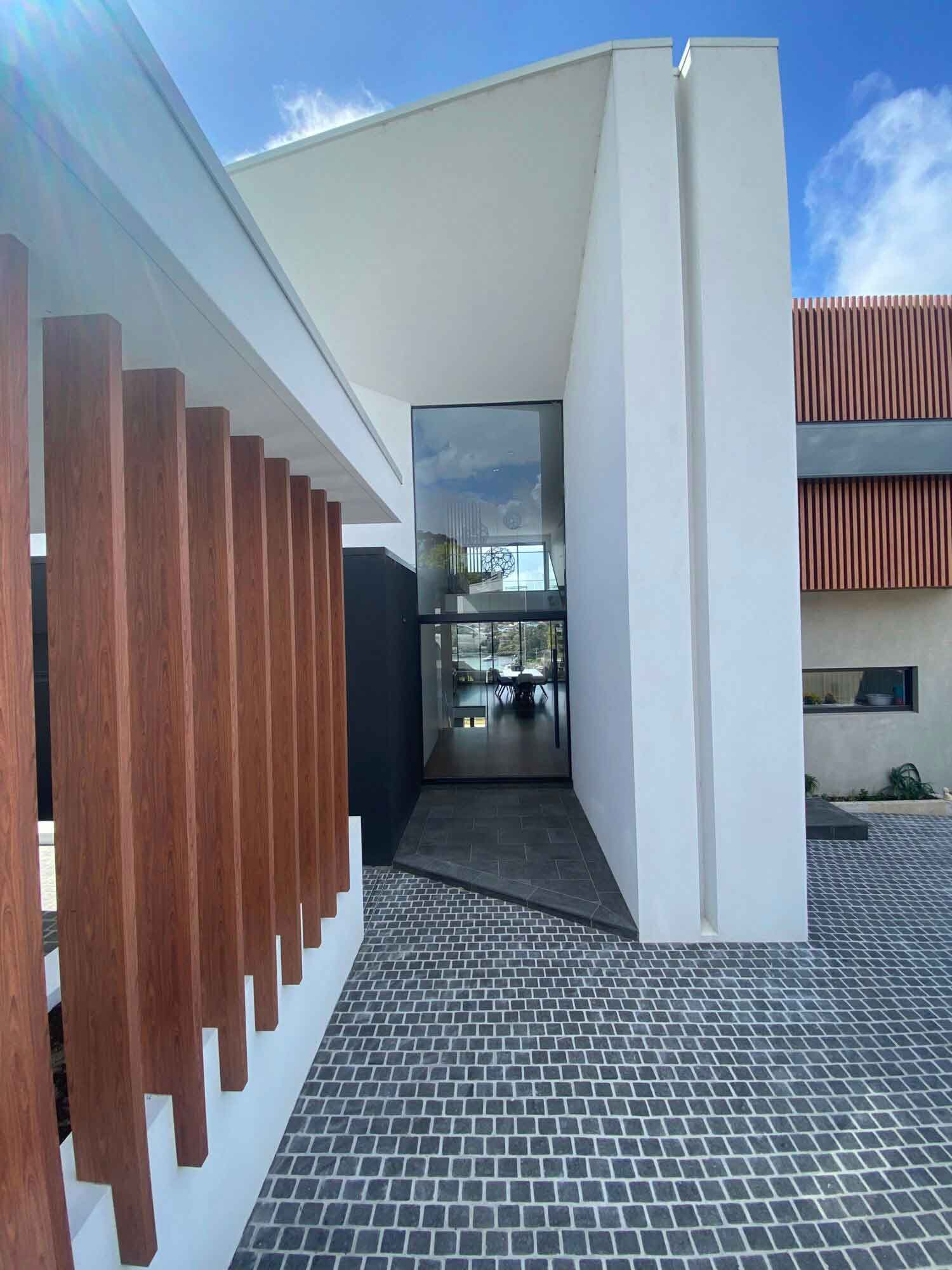
Cobblestone pavers installed across the driveway of a modern Australian home
Peter Yusuf

Cobblestone pavers are small-format natural stone or porcelain tiles used for driveways, courtyards, garden paths and selected poolside applications.

Royal Tiles stocks natural stone cobblestones in individual and mesh-backed formats, along with porcelain cobblestone mosaic tiles supplied on pre-laid mesh sheets. No two pieces of natural stone look exactly alike and that’s part of its charm.

If you prefer something more uniform and low-fuss to keep clean, porcelain is a great option. Pop into our Auburn or Lidcombe showrooms in NSW to see the full range in person.

Natural Stone vs Porcelain Cobblestone: What to Consider

The choice comes down to three things: maintenance commitment, project type and budget.

Choose natural stone for heritage renovations, established gardens and projects where genuine variation between individual setts is part of the brief. The tonal shifts in Gold Quartz or Tiger Skin are what make those products worth specifying. Porcelain does not replicate that exact character, and for customers who value it, that difference matters more than any maintenance consideration.

Choose porcelain for new builds, pool surrounds, commercial projects and any application where a natural stone sealing schedule creates a practical problem. The low-porosity surface resists staining and pool chemical penetration more effectively, and the pre-laid mesh format covers more surface area per piece than individual setts.

On budget. Natural stone cobblestones carry a higher per-square-metre cost than the porcelain equivalent, and the ongoing cost of sealed surface maintenance adds to the total across the life of the installation. For a large driveway or commercial courtyard, that is a meaningful figure over ten years.

The comparison our team works through most often is between natural Platinum Grey and Platinum Grey Porcelain. Both read as the same colour on a finished surface. The difference is entirely in the surface character and the ongoing maintenance requirement. Seeing both side by side in the showroom is the most reliable way to make that comparison before committing.

What Is Cobblestone?

Cobblestone pavers forming a curved garden pathway through a lawn.


Cobble paving turns up in two very different contexts in Sydney right now. Heritage homes in the inner suburbs reach for it. New builds in Western Sydney and the Hills District reach for it too. Many European cities still retain original cobblestone streets that have borne daily traffic for hundreds of years. That durability is structural, not coincidental. The dense, small-format pieces distribute weight more evenly than large-format pavers, reducing concentrated wear on the surface beneath.

In Sydney homes today, cobblestones appear in two forms. Natural stone cobblestones carry genuine tonal variation between individual pieces. No two setts read the same and that variation gives a cobblestone floor or driveway the particular character that a uniform manufactured alternative cannot replicate. Porcelain cobblestone mosaic tiles bring the same aesthetic in a mesh-backed format with lower maintenance requirements and better resistance to pool chemicals and heavy foot traffic.

The Royal Tiles cobblestone range covers both. What follows explains which products suit which projects and how to choose between the two forms for a Sydney outdoor space.

Natural Stone Cobblestone: Colours and Finishes

The tone shifts, surface differences and slight irregularity between individual setts give a cobblestone driveway or courtyard its particular character. 

Capri Cobblestone sits in the warm-to-mid tone range and suits both traditional garden settings and contemporary courtyards. We recommend Capri Cobblestone for projects that pair with rendered masonry, sandstone edging and established plantings. It reads as natural without leaning toward any particular period style.

Gold Quartz brings ochre and honey tones to a driveway or garden path. Sydney’s afternoon sun draws out the warm gold in the stone in a way that shifts noticeably from morning light and this is a characteristic customers notice in the showroom and consistently remark on after installation. Pair Gold Quartz with timber fence lines, warm-toned render and native garden settings for the best result.

Green Quartz offers a cooler, more distinctive palette. The green-grey tones work alongside native plantings and contemporary architecture with dark metal or black-framed details. For customers who want their cobble paving to sit quietly in the background of a modern garden, Green Quartz is the natural choice.

Platinum Grey is the most requested natural stone cobblestone at the Royal Tiles showroom. The cool grey reads consistently across different light conditions and coordinates with a wide range of architectural styles, from federation homes in Sydney’s inner suburbs to new builds across Western Sydney. We recommend Platinum Grey for customers who want natural stone that suits the house without becoming the focus of it. Pair with white or off-white render, dark window frames and concrete edging.

Tiger Skin carries ochres, greys and rusts across each piece. The surface reads differently depending on viewing angle and light direction. Choose Tiger Skin when the cobblestone is intended to be a feature element in the design rather than a background material.

Australian Standard AS 4586 governs slip resistance classification for new pedestrian surfaces. The Wet Pendulum Test assigns P ratings from P0 to P5, where P5 reflects the greatest slip resistance. The natural surface texture of stone cobblestones contributes to outdoor slip performance, but requirements vary by location and gradient. Before specifying for a pool surround or steep cobble paving application, confirm the P rating required for that location with a licensed building professional. 

Natural stone cobblestones need a sealed surface to protect against staining and moisture in outdoor conditions. The resealing frequency depends on exposure level, traffic and proximity to pool water or garden runoff.

Porcelain Cobblestone Tiles: The Look Without the Upkeep

Porcelain cobblestone mesh pavers deliver the small-format cobble aesthetic on a pre-laid sheet. Each sheet carries multiple cobble-shaped porcelain tiles in a fixed layout, which produces consistent joint widths across the finished surface. The mesh cobblestone paver format covers more ground per piece than individual natural stone setts, which makes it the preferred choice for landscape designers specifying large commercial courtyards and resort walkways.

The maintenance part for both materials like porcelain and natural stone, is significant. Porcelain’s low-porosity surface resists pool chemical penetration and staining more effectively than natural stone. For pool surrounds, high-traffic driveways and commercial courtyards, the natural stone sealing schedule is not practical. In such cases, the porcelain cobble mosaic range answers that problem.

Ash Black Porcelain Cobbles Mosaic Tile is the deepest option in the range. The charcoal tone suits contemporary pool surrounds and entry courts where strong contrast against light render or pale coping is part of the design intent. Pair Ash Black with white concrete edges or light grey coping for the best contrast.

The Country range covers the widest section of Sydney residential projects.

Country Beige Porcelain carries sandy, warm tones. We recommend Country Beige for driveways and courtyards that coordinate with timber decking and natural stone garden walls. 

Country Bone Porcelain sits slightly cooler and is the product our team reaches for first when a customer wants a light cobblestone tile that coordinates with off-white render. 

Country Gris Porcelain moves into cooler mid-grey and works well alongside concrete elements and dark metal architecture.

Country Perla Porcelain carries a pearl-toned finish that reads as a refined stone look without the warm undertone of Beige or Bone. Choose Country Perla for projects where a neutral, sophisticated finish needs to sit quietly alongside bold landscaping or dark stone walls.

Platinum Grey Porcelain mirrors the tone of the natural stone Platinum Grey in a format that needs no periodic sealing. For customers who want that colour at a pool surround or commercial scale where sealing natural stone is impractical, this is the first product our team recommends.

Dark cobblestone pavers installed around the entrance of a modern home

Where to Use Cobblestone Pavers

Driveways 

The small cobblestone format suits heritage homes because it references the period character of the property. For contemporary homes, we recommend Platinum Grey in natural stone or porcelain. It reads as an architectural choice rather than a period reference and coordinates with modern gate finishes, concrete edging and dark render.


Courtyards and garden paths

 The small-format density of cobble paving distributes foot traffic load evenly across the surface, which reduces wear on paths that carry daily use across different seasons. For customers mixing cobblestones with other outdoor paving formats, the Royal Tiles outdoor tiles guide covers complementary options, and the crazy pavers guide covers mixed-format cobblestone floor applications across larger outdoor areas.


Pool surrounds

Cobblestone pavements suit pool surrounds in Sydney homes, but the slip rating requirement for pool areas is specific. Confirm the required P rating for your pool surround with a licensed building professional before selecting a product.


Commercial projects

The porcelain cobble mosaic range suits resort walkways, luxury apartment entry courtyards and restaurant terraces. Here, the cobblestone aesthetic is part of the brief and low long-term maintenance is a practical requirement in such cases.

Natural Stone vs Porcelain Cobblestone: What to Consider

The choice comes down to three things: maintenance commitment, project type and budget.

Choose natural stone for heritage renovations, established gardens and projects where genuine variation between individual setts is part of the brief. The tonal shifts in Gold Quartz or Tiger Skin are what make those products worth specifying. Porcelain does not replicate that exact character, and for customers who value it, that difference matters more than any maintenance consideration.

Choose porcelain for new builds, pool surrounds, commercial projects and any application where a natural stone sealing schedule creates a practical problem. The low-porosity surface resists staining and pool chemical penetration more effectively, and the pre-laid mesh format covers more surface area per piece than individual setts.

On budget. Natural stone cobblestones carry a higher per-square-metre cost than the porcelain equivalent, and the ongoing cost of sealed surface maintenance adds to the total across the life of the installation. For a large driveway or commercial courtyard, that is a meaningful figure over ten years.

The comparison our team works through most often is between natural Platinum Grey and Platinum Grey Porcelain. Both read as the same colour on a finished surface. The difference is entirely in the surface character and the ongoing maintenance requirement. Seeing both side by side in the showroom is the most reliable way to make that comparison before committing.

Buying Cobblestone Pavers in Sydney

Royal Tiles stocks cobblestone pavers in Sydney at the Auburn showroom at 255 Parramatta Road, around 25 to 35 minutes from the Sydney CBD, with a second showroom now open in Lidcombe serving Western Sydney. Customers searching for cobblestone pavers near them across Parramatta, the Hills District, Liverpool or anywhere in NSW can visit either showroom to see the full natural stone and porcelain range in person.

Three ways to get started:

Browse the Royal Tiles cobblestone pavers range to see all natural stone and porcelain cobble mosaic options together.

Samples are available to take home from the Auburn showroom or Lidcombe showroom so you can see how each cobblestone tile or natural stone product reads against your existing driveway edging, garden wall or pool coping in natural outdoor light, which no product photo shows accurately.

Book your free design consultation and bring your site plan or photos of the space. Our team can advise on which cobblestone format, colour and finish suits your specific project in Sydney or across NSW.

Magazine and flower pot on white penny round mosaic tile floor Magazine and flower pot on white penny round mosaic tile floor mobile version

Slash prices, not your budget!

Enjoy savings of up to
50% on all the clearance items.

Peter Yusuf - Royal Tiles

Peter Yusuf

linkedin

Peter Yusuf is a seasoned Sales and Business Development Manager at Royal Tiles in Sydney, Australia, with a proven track record of success in the global architectural and interior design sectors. With over a decade of experience, he possesses a rich understanding of tile selection and design that has helped countless clients transform their spaces. Peter's expertise spans a wide array of materials and styles, positioning him as a trusted authority in the tile industry.

The Right Order to Choose Tiles for a Whole Home Renovation

Modern home with tiled outdoor entertaining area and swimming pool
peter Yusuf

Planning an exciting whole home renovation for a soulful interior design? A whole-home renovation is the perfect chance to give your space the best tile makeover that truly feels lived in but it involves more tile decisions than it first appears. The main floor needs to work across connected living spaces. Kitchens and bathrooms introduce different surfaces.

At first glance, choosing each tile separately can make the process feel less daunting, but you also do not want to create a space where every room seems to contradict each other design wise.

A floor tile chosen for the living room may not suit the kitchen splashback. A bathroom feature tile may introduce a colour that has nowhere else to go. By the time the outdoor area is considered, there can be too many unrelated tile choices already locked in.

The key here is not to use the same tile everywhere but to choose the tiles in the right sequence. Begin your tile shopping with material that will cover the most ground and use it as the foundation for other rooms to follow. Style the kitchen, bathroom, laundry and outdoor tiles around that base. While it is pretty tempting, save the smaller decorative decisions until the main tile palette is settled.

That approach gives the house continuity without taking away the character of individual rooms.

Why Room-by-Room Tile Choices Create a Disjointed Home

Choosing tiles room by room feels sensible at first. The kitchen gets its own tile. Then the bathroom. Then the laundry. By the time the outdoor area is considered, there may be four or five good tiles in the house that do not quite belong together.

The problem is not that the tiles are wrong on their own. It is that they were chosen without looking at what comes before and after them.

A whole-home renovation needs an order. The first tile establishes the base. The next choices respond to it. The smaller details come later.

That approach gives each room some freedom without allowing the house to pull in different directions.

Start With the Material That Repeats Most

Floor tiles are the most important design elements that add personality, grab the most attention and infuse with all other tiles to create the best look and style. Naturally, floor tiles are the best way to start your tile renovation so every other tile comes together beautifully in unison.

Porcelain tiles are particularly useful as the anchor material. They are practical for busy floors and there are collections that take on the appearance of limestone, marble, concrete and timber.

Limestone-look porcelain tiles can keep a home soft and natural. A concrete-look floor suits a cleaner contemporary interior. A stone-look surface can give the rooms a quiet foundation without becoming the feature itself.

Inspirational home renovations go beyond the colour. While the right colour scheme is extremely crucial, also make sure you consider the undertone, surface finish, scale and how the tile looks in natural light.

Once the main porcelain floor has been chosen, it gives the rest of the renovation something to work against.

The most memorable homes are not built around what is fashionable in a particular year. They are shaped by architecture, craftsmanship, travel, personal memories and the people who inhabit them.

So, choose floor tiles that can last a long time while complementing the other tiles perfectly.

Choose Ceramic Tiles Against the Anchor Floor

Once you have done your homework and settled with the best floor tiles, which is porcelain tiles usually, it is time to choose the perfect wall surfaces to blend in perfectly with the floors to achieve an expressive design.

Ceramic tiles are the perfect choice for this. Ceramic tiles bring the best out of kitchens and bathrooms designs as these tiles offer more flexibility with colour, shape, texture and finish.

A floor with strong movement may need a quieter ceramic above the benchtop. A restrained floor gives the splashback more room to carry pattern or texture.

The same design theory applies in the bathrooms. A simple porcelain floor can perfectly complement a more textured ceramic wall tile creating the perfect balance. A classic subway format keeps the room familiar. A handmade-look ceramic brings variation. A more decorative shape can add interest without requiring the entire room to become a feature.

This is where the second stage of the sequence matters. The wall tile is being chosen because it suits the floor tiles, not in isolation.


Sequencing the Tile Selection for Big Rooms: Kitchen, Bathroom, Laundry, Outdoor

With the tile selection for the common areas like floors and walls finalized, it is time to shift the attention to the individual rooms to choose the best kitchen tiles, bathroom tiles, laundry tiles and outdoor tiles meticulously.

Start with the kitchen as it is more acquainted with the main living areas. The floor tiles are the base and more personality is added through the perfect kitchen wall tiles and splashback tiles.

Bathrooms give you more freedom. They are contained spaces, so a stronger colour, texture or tile scale can stay within the room. Allow the floor tiles to be related to the main tile palette, you can let your wall tiles be more expressive choices.

The laundry room does not need to introduce another design direction. A practical ceramic wall tile can pick up a colour already used elsewhere. The floor can echo the main porcelain. Even a related grout colour can help keep the room connected.

Outdoor areas need the same consideration. The alfresco does not have to use the exact indoor tile, but a related colour, stone appearance or texture can make the transition feel deliberate.

Outdoor tiles also need to suit the conditions. Areas exposed to weather, particularly around pools, require products appropriate for exterior use and the required slip characteristics.


Matching Without Repeating: Using One Palette Across Different Tiles

A cohesive house is not a house where every tile is identical. It is usually better to repeat a visual idea than a product. A warm undertone can appear in several different tiles. A stone reference can return in another room. A matt finish can be used in one area while a related textured surface appears elsewhere.

The same palette can support different tile shapes and scales.

  • A restrained porcelain floor.

  • A ceramic wall tile with a slightly different texture.

  • A related grout colour.

  • A mosaic used in one focused area.

Those choices can feel connected without looking repetitive. This is especially effective when shopping tiles for home renovation because it gives each room its own character.


Where It Is Fine to Break the Rule

Once the main tile palette is established, there are places where it makes sense to step away from it.

Mosaic tiles and decorative tiles are usually best chosen last. By this point, the floor and main wall surfaces have already done their job. The feature tile only needs to add a small amount of detail.

A mosaic inside a shower niche can be enough. A patterned section in a powder room can give a small space a stronger identity. A decorative kitchen splashback can become the highlight that people cannot stop admiring.

The important thing is timing. Feature materials become easier to choose once the foundation is already settled.

Magazine and flower pot on white penny round mosaic tile floor Magazine and flower pot on white penny round mosaic tile floor mobile version

Slash prices, not your budget!

Enjoy savings of up to
50% on all the clearance items.

The Buying Order That Keeps the Renovation Together

If you want the best way to plan your tile buying order, there is a simple sequence behind the whole approach.

  • First, go for porcelain tiles as the material for the main floor. This is the anchor and usually the material that repeats across the most square metres.

  • Second, choose ceramic tiles for kitchen and bathroom walls. These surfaces should respond to the floor rather than compete with it.

  • Third, choose mosaic tiles and decorative tiles as these tiles can be more expressive once the main palette is locked in.

  • Finally, go for timber look tiles if the room needs more warmth against a cooler porcelain floor tile surface.

That order does not remove choice. It makes the choices easier.

A Practical Way to Make the Tile Decisions from Royal Tiles

The best tiles add the soul to the interior design of every room. Here are the tips recommended by our tile experts at Royal Tiles to shop the right tiles:

  • Start your renovation planning and tile shopping with the house rather than the specific rooms. Consider the natural light, existing timber, cabinetry, window frames and the way the living spaces merge through interior design.

  • Then choose the main porcelain floor. Take time with this decision because it will influence more of the renovation than any other tile.

  • Move to ceramic wall tiles in the kitchen and bathrooms. Compare them against the actual floor rather than choosing from a sample on its own.

  • Once those decisions are comfortable, bring in mosaics and decorative tiles where a feature is genuinely useful.

  • If a room needs more warmth, look at timber look tiles as a supporting material rather than creating another unrelated palette.

The result should not feel perfectly matched. It should feel considered.

In Conclusion: Plan the Tile Shopping Order Before You Buy

The best time to work out the order is before the first tile is chosen.

Royal Tiles offers premium porcelain, ceramic, mosaic, decorative and outdoor tiles collections for Sydney renovation projects and has one of the largest tile showrooms in Sydney.

If you are choosing tiles for several rooms, Royal Tiles offers the best tile shopping experience where you can compare and feel some of the most exquisite and beautiful tile curations.

Visit the Royal Tiles showroom in Lidcombe or Auburn, or book a free design consultation to shop the best tiles for an elevated interior design and visual appeal for your space.

Peter Yusuf - Royal Tiles

Peter Yusuf

linkedin

Peter Yusuf is a seasoned Sales and Business Development Manager at Royal Tiles in Sydney, Australia, with a proven track record of success in the global architectural and interior design sectors. With over a decade of experience, he possesses a rich understanding of tile selection and design that has helped countless clients transform their spaces. Peter's expertise spans a wide array of materials and styles, positioning him as a trusted authority in the tile industry.

Kitchen Layout Guide 2026:
Best Tiles for Galley, Island, Peninsula, L-Shaped Kitchens & More

Modern open-plan kitchen with a large island, wood
  cabinetry, black bar stools and an adjacent dining area, illustrating a contemporary island kitchen layout for tile design inspiration.
Peter Yusuf

When it comes to stunning kitchen renovations, interior designers say that the best kitchens are not built, they are composed. Like an artist creating art on an empty canvas with every stroke of a brush, like a sculptor giving life to a statue with every careful chiseling, every captivating kitchen design is a result of meticulous and well-thought planning including the layout and cabinetry to the choice of kitchen tiles that anchor the entire aesthetic.

Kitchen layouts are the single biggest factor that impact the tile choice in modern renovations and the shape of the kitchen decides which kitchen floor tiles, or kitchen wall tiles are the best choice for your new space.

Whether the goal is a light-reflecting splashback for a galley kitchen layout, a large format porcelain floor for an open plan island design, a single cohesive tile for a peninsula bench, or a precisely mitred corner for an L-shaped kitchen, the right approach starts with the floor plan, not the tile.

Sydney homeowners always love stylish kitchens with exciting features trending every year and it never disappoints.  For kitchen renovations for 2026  four major layouts, galley, island, peninsula and L-shaped kitchen layout have stolen the spotlight and in this guide we will explore the best kitchen tiles from Royal Tiles for every type of kitchen layout you aspire to create without having to look back again.

Why You Should Choose the Kitchen Tiles based on the Layout and not the other way Around

If you are still doing kitchen renovations based on the beautiful tiles you saw on Pinterest or a unique tile caught your attention while scrolling through a kitchen design video on Instagram hoping somehow you will force those porcelain tiles into your kitchen layout, then it’s time to make an important U-Turn.

Most kitchen renovation conversations start backwards. For instance, a large format porcelain slab looks stunning in an open plan island kitchen and flat in a narrow galley, where its scale only exaggerates the tightness of the walk space.

Hence, Kitchen layouts dictate sightlines, sightlines dictate scale and scale dictates which tile format will actually do its job. Get this sequence right and the kitchen looks and feels amazing. Get it backwards and even an exquisite tile ends up feeling out of proportion within the design.

In short, start your tile purchase with the kitchen layout in mind first and not the other way around.

Best Kitchen Tiles for Galley, Island, Peninsula, & L-shaped Kitchen Layouts in 2026

Sydney’s diverse property and renovation market has been evolving so rapidly that it makes the kitchen layout knowledge genuinely important for homeowners in 2026.

For instance, Federation semis in the Inner West and Eastern Suburbs are regularly refurbished to create more effective galley or open-plan kitchens. Compact peninsula or tiny island kitchens are a common element of new apartment complexes in Parramatta, Rhodes and the Bays Precinct, Detached houses and duplexes in Sydney’s South West growth corridors and the Hills District, on the other hand, are usually built around a large central island that acts as the ground floor’s visual focal point.

Let’s explore the best kitchen tiles and design ideas for all types of Sydney kitchen layouts in 2026:


Galley Kitchens: Widen the Walk with Reflective, Pale Tiles.

Bright galley kitchen with pale floor tiles and white textured subway tile splashbacks reflecting natural light.

Galley kitchen layouts are popular in Sydney and are common in older apartments, terrace houses and run between two parallel walls with a walkway between them. Galley layouts need careful selection of tiles as the wrong tile can shrink the room visually.

The best tip to crack the galley layout design is the light, not colour. Pale, glossy or satin finishes bounce daylight down the run instead of absorbing it, which matters more in a galley kitchen than anywhere else in the house. 

A full height splashback in soft white ceramic tiles does this well and so does a glazed handmade subway tile, the slight surface variation in a handmade glaze actually helps catch light from more angles than a flat, mass-produced tile does.

Where the galley runs into a hallway or living zone, carrying the same kitchen floor tile straight through the doorway is worth doing properly. That one junction is usually where a narrow kitchen either opens up or gets cut off at the knees.


Island Kitchen Layout: Let the Floor do the Design Talking

Modern island kitchen with a timber island, stone benchtop and large-format stone-look floor tiles in a bright open-plan space.

Island kitchen layouts are one of the most stylish layouts for modern kitchens. However, island kitchen layouts work differently to every other layout on this list. Guests circle the bench on all four sides, so the floor gets looked at, properly looked at, not just glimpsed on the way to the fridge.

Hence, for island kitchens, bolder large format tile options always come to the rescue and designers love these tiles for island layouts.

For island kitchens, Large format porcelain tiles with a stone or concrete look designs give a grounded, architectural feel, especially when they are paired with fewer grout lines to highlight the floor plane’s size. Timber look tiles go excellent with a stone benchtop island for homeowners who admire warm design over minimalism because they combine the visual comfort of a wood grain texture with the durability of porcelain tiles.

The island itself already does a lot of visual work, so don’t compete with it on the walls. One run of terrazzo look tiles behind the cooktop is usually enough. Skip the full wraparound splashback here. The floor and the island stay the focal points, which is the whole point of this layout in the first place.


Peninsula Layout Kitchen Tile Ideas

Warm neutral peninsula kitchen with a tiled peninsula end panel and matching splashback, opening into a light-filled dining and living area.

A peninsula is an island layout that has one end still tied to a cabinetry run or a structural column. It’s become the popular and practical layout across Sydney apartments and smaller new builds, mostly because a freestanding island simply doesn’t fit the floor. The catch with a peninsula is that it sits at the join between the kitchen and whatever room it opens onto, living, dining, sometimes both, so the tile can’t just serve the kitchen side. It has to look considered from the kitchen side and the living side, not just one or the other.

A single, considered splashback tile earns its keep here more than almost anywhere else in the house. The Royal Tiles kitchen splashback tiles range has plenty of glazed and textured options built for exactly this brief and something like Moroccan zellige tiles on the peninsula’s end panel does a lot with very little.

It gives the space character without tipping into a scheme that needs three tiles to make its point. If the peninsula opens onto a dining setting, running a
kitchen mosaic tile along that exposed vertical edge is a small move that earns its place twice over, it hides what would otherwise be an awkward structural seam and it gives the eye something considered to land on from the dining table.


L-Shaped Kitchen Layouts: Get the Corners Right First

The L-shaped kitchen is still the popular layout you’ll find in most established Sydney homes in 2026, two walls meeting at a right angle to form one working triangle. That corner is where the whole design either comes together or falls apart. It’s the one spot where pattern, grout lines and tile joins have nowhere to hide, they either line up, or they don’t.

The fix is simple: pick one tile and run it around the corner instead of switching finishes wall to wall. A rectified, low-variation subway tile or a fine-grain ceramic wall tile will turn that corner with barely any cutting and a grout line you’d have to look for to notice.

And if one of the two walls runs long and uninterrupted, that’s your chance for a full-height splashback, there’s enough wall space for a bolder pattern to actually breathe, without competing with an island or peninsula nearby.

Shop Kitchen Tiles with Confidence for Your Layout  from Royal Tiles

A kitchen layout is not a limitation to design around that limits your style aspirations. It is the starting brief that tells you exactly which tile format, finish and scale will actually work for your kitchen. Galley kitchens need light and reflectivity. Islands need floor tiles bold enough to be viewed in the round. Peninsulas need one considered tile that reads well from two rooms. L-shaped kitchens need a corner solved with precision.

Royal Tiles has spent since 1989 importing and supplying tiles for exactly this range of Sydney homes and is widely regarded as one of the best tile shop in Sydney for renovators who want a layout-first, design-led recommendation rather than a generic splashback suggestion.

For homeowners still deciding between finishes, our exquisite full kitchen tile range is organised by floor, wall, splashback and mosaic options and the Auburn and Lidcombe showrooms carry physical samples of every tile.

Our kitchen tile collection is the perfect curation of some of the most trending tiles in the porcelain, ceramic, mosaic, subway, terrazzo tile range and more. 

Order tiles online today or visit our showrooms to buy the best kitchen tiles that elevates your kitchen layout.

Magazine and flower pot on white penny round mosaic tile floor Magazine and flower pot on white penny round mosaic tile floor mobile version

Slash prices, not your budget!

Enjoy savings of up to
50% on all the clearance items.

Peter Yusuf - Royal Tiles

Peter Yusuf

linkedin

Peter Yusuf is a seasoned Sales and Business Development Manager at Royal Tiles in Sydney, Australia, with a proven track record of success in the global architectural and interior design sectors. With over a decade of experience, he possesses a rich understanding of tile selection and design that has helped countless clients transform their spaces. Peter's expertise spans a wide array of materials and styles, positioning him as a trusted authority in the tile industry.

8 Moroccan Zellige Kitchen Splashback Ideas for Sydney Homes in 2026

Moroccan zellige kitchen splashback in rich terracotta and deep brown tones with handmade glaze finish, paired with timber cabinetry and stone benchtops in a Sydney home kitchen.
Peter Yusuf

Have you recently walked into Sydney’s most beautifully renovated kitchens and been captivated by the alluring beauty of the splashbacks adorned with authentic Moroccan zellige tiles that feel like a piece of art?

Australian homeowners have been enchanted by the craftsmanship and the unique individuality of Moroccan zellige tiles that feel like someone  breathed an artistic soul into a piece of clay.

Moroccan zellige tiles have been increasing in popularity as the tile of choice for kitchen splashbacks for their unique ability to capture natural texture, gem-like glow, and warm earthy feel.

Crafted by the gifted hands of artisans in beautiful Morocco using the traditional zellige technique, explore how you can elevate the look of your kitchen splashback with the 8 best Moroccan zellige kitchen splashback tile ideas for Sydney homes in 2026.

If you love the design ideas, bring a piece of Morocco to your homes with the best Moroccan zellige tiles collection from Royal Tiles Sydney.

Why Are Moroccan Zellige Splashbacks Trending in Sydney Kitchens?

The beauty of Moroccan zellige tiles is that unlike modern machine made tiles, they embrace imperfection and celebrate art. Moroccan zellige tiles have the perfect character for Sydney’s landscape with coastal homes, modern contemporary apartments, and heritage renovations.

With Sydney homeowners increasingly preferring the natural warm tone, unique textures,  and artistic characteristics of the Moroccan zellige tiles over the tiles that feel too cold, it’s no surprise that they are getting popular in modern interior designs.

Every unique texture, variation in colour and dimension adds to the charm and beauty of the Moroccan zellige tiles making them more desirable.

To learn more about their features, benefits and design uses, read our complete Moroccan zellige tiles guide.

Warm neutral peninsula kitchen with a tiled peninsula end panel and matching splashback, opening into a light-filled dining and living area.

Moroccan Zellige Kitchen Splashback Ideas for Sydney Homes in 2026

2026 is the year of Moroccan zellige  kitchen splashback tiles with so many homeowners falling in love with these beautiful tiles.

Elevate your tile game and achieve an even more stylish appeal to your kitchen splashbacks by following these 8 Moroccan zellige kitchen splashback tile ideas for 2026:

1. Soft White Zellige for Coastal Sydney Kitchens

White has always remained a popular colour choice for kitchen tiles in Sydney. But Sydney homeowners have started embracing the colour white for kitchens in a different form.

Rather than going for the same uniform white coloured tiles like the subway that feels boring at times, the love for Moroccan zellige tiles is growing especially in coastal homes in Sydney.

We recommend soft white zellige tiles for coastal Sydney homes where natural light plays a significant role in interior design.

Moreover, pair soft white zellige tiles with oak cabinetry, brushed nickel tapware, and linen textured finish to get the complete look.


2. Sage Green Cabinetry with Ivory Zellige Tiles

One of the most captivating kitchen colour combinations for 2026 is the sage green and ivory white combination. If you want to achieve a grounded, soft kitchen that feels more connected to nature, go for the sage green cabinetry and ivory zellige pair as they complement each other perfectly.

The ivory zellige adds contrast and texture while sage cabinetry introduces colour without making the space too overwhelming.


3. Full Height Kitchen Splashbacks

If you want to make a kitchen style statement with Moroccan zellige tiles go for the full height kitchen splashbacks from the benchtop all the way to the ceiling.

Interior designers are loving this trend with Moroccan zellige tiles as the subtle variations they bring create a visual interest without having to rely on any bold patterns.


4. Modern Mediterranean Inspired Kitchens

Australian kitchens continue to be inspired by the captivating Mediterranean designs as it prefers natural materials and brings relaxed luxury vibes to any kitchen space. There are few tiles that complement the Mediterranean look than the zellige tiles.

If you want to capture the warmth and authenticity of Mediterranean design in a contemporary setting, go for cream or sand coloured zellige tiles.

Make sure to combine the zellige tiles with natural stone, brushed nickel, and warm timber cabinetry to get the best looking kitchen design effortlessly with a timeless visual appeal.


5. Vertically Stacked Zellige Layouts

While brick patterns have been the traditional norm, go for a bold experimentation with vertically stacked zellige tiles layout.

Designers have been loving this trend as it adds more rhythm and taller appearance  to the kitchen design while making the space feel more contemporary.

The beautiful handcrafted tiles will stand out more in this unique setup.


6. Warm Neutral Colour Palettes

Modern kitchen designs are getting more exciting than ever with designers and homeowners not afraid of moving away from the status quo and experimenting with new ideas and palettes.

The idea of having cool grey kitchen tiles is gradually moving towards experimenting with more natural, warm colours inspired by sandy and earthy palettes.

Go for warm beige, soft beige, sand, ivory, and cream Moroccan zellige tiles and combine them with timber flooring and natural stone benchtops to get the best look.


7. Pair Moroccan Zellige with Natural Stone Benchtops

The secret to achieving the right balance in luxury kitchen designs is contrast. The timeless elegance of natural stone complements the organic feel of the Moroccan zellige tiles perfectly.

Try combining white zellige with quartzite benchtops, ivory zellige with limestone infused benchtops, and soft green zellige tiles with marble and watch the magic unfold before your eyes.


8. Make your Kitchens feel larger with Zellige Tiles

If your kitchen space feels small, make it appear larger by going for Moroccan zellige tiles as these tiles beautifully reflect and bounce light around the room with their glossy glazed surface.

Go for white, ivory, soft cream, and pale green Moroccan zellige tiles to dramatically enhance the perception of a kitchen space that feels small.

Magazine and flower pot on white penny round mosaic tile floor Magazine and flower pot on white penny round mosaic tile floor mobile version

Slash prices, not your budget!

Enjoy savings of up to
50% on all the clearance items.

Choosing the Right Zellige Colour for Your Kitchen

The ideal Zellige colour palette often depends on the overall design direction of the space.

For coastal inspired kitchens

Choose soft whites, creams and pale sands to get the coastal feel.

For contemporary style kitchens

Go for warm whites, greige tones and subtle greens.

For Mediterranean-inspired kitchen interiors

Choose ivory, cream and earthy neutral palettes for the best results.


For heritage kitchen renovations

Classic whites and warm off-whites remain the classic choices.

A good rule of thumb is to let the unique texture and beautiful craftsmanship of the tile evoke visual interest, rather than relying mainly on bold colour.

Shop Timeless and Classic Moroccan Zellige Tiles from Royal Tiles Sydney

Moroccan zellige tiles have captivated the world for centuries with their enduring and enchanting beauty. These tiles are handmade by the masters of the craft from Morocco and loved by homeowners all over the world.

With Moroccan zellige tiles increasing in popularity, Sydney homeowners are actively searching for the best place to buy these tiles.

Moroccan zellige tiles are defined by their authenticity, imperfection, and artistic textures that reflect light beautifully. However, shopping authentic zellige tiles can be a challenge considering that the Sydney market is flooded with the mass-produced versions.

Hence, Royal Tiles presents to you the most genuine and authentic collection of Moroccan zellige tiles in Sydney.

You can trust our legacy of over 40 years in the tile industry and believe us to deliver only the highest grade Moroccan zellige tiles for your dream project.

Visit our tile showroom in Auburn at 255 Parramatta Rd, Auburn NSW 2144 or tile shop in Lidcombe at 32 Parramatta Rd, Lidcombe NSW 2141 to shop the best Moroccan zellige tiles in Sydney and bring your aspired design visions to reality!

Peter Yusuf - Royal Tiles

Peter Yusuf

linkedin

Peter Yusuf is a seasoned Sales and Business Development Manager at Royal Tiles in Sydney, Australia, with a proven track record of success in the global architectural and interior design sectors. With over a decade of experience, he possesses a rich understanding of tile selection and design that has helped countless clients transform their spaces. Peter's expertise spans a wide array of materials and styles, positioning him as a trusted authority in the tile industry.

Balcony Tiles Guide:
Best Tiles for Outdoor Balconies

Modern Australian apartment balcony featuring Pompeii Bianco porcelain floor tiles with a natural stone look, styled with timber outdoor furniture, a BBQ, and a scenic coastal city view at sunset.
Peter Yusuf - June 12, 2026

Balconies in Sydney take a beating. Summer barbecues, early morning coffees, kids dragging mud in from the backyard. It is a space that actually gets used, not just looked at. Which means when you are choosing balcony tiles for yourself, the material really does matter.

Something worth flagging before anything else: outdoor and indoor tiles are not interchangeable and plenty of homeowners have learned this the expensive way. The previous owner laid some tiles that look great inside and a few years later, you have got edges lifting and a surface that becomes a slip hazard the moment it rains.

Outdoor tiles are built differently. They are frost-resistant, slip-rated and designed to handle Sydney’s weather. 

Note: Before buying any outdoor tiles, it is important to make sure that it is certified for outdoor use. It is one of those things that is easy to overlook and annoying to fix later.

Likewise, let’s break down the materials worth considering in 2026.

balcony tiles material guide showing porcelain travertine sandstone granite and timber look tiles for outdoor balconies

Porcelain

Most people doing a balcony renovation in Sydney end up with porcelain and it is usually the right call. It handles everything the Sydney climate throws at it without much complaint, like heat, rain or salt air if you are near the coast and once it is down, it pretty much looks after itself.

The range available now is genuinely impressive. A few years ago, porcelain meant a fairly generic grey or cream tile. Now, some finishes convincingly look like travertine, timber, sandstone and terrazzo. So the practical benefits of porcelain do not have to come at the cost of the look you actually want.

For apartment balconies, large porcelain-format tiles are worth considering. Fewer grout lines mean that your small balcony feel more spacious than it is. If the living area and balcony share the same tile, that indoor-outdoor flow that Sydney apartments do well suddenly becomes very easy to achieve.

For rooftop terraces or balconies where drainage underneath is a consideration, the 20mm porcelain pavers are the better option. Thicker, stronger and they can sit on adjustable pedestals without being permanently fixed to the substrate.

See the outdoor tile range at Royal Tiles

Travertine

Travertine has a warmth to it that is hard to replicate. The natural beige tones work across a lot of different settings and it stays cool underfoot through summer, which is a genuine advantage in Sydney. It has also been used outdoors for centuries so the durability credentials are well established.

The honest part: it needs sealing and resealing over time. Skip that and moisture gets in, staining follows and the surface starts looking rough. Stay on top of it and travertine ages really beautifully. For covered or semi-covered balconies, it is a great choice. For a fully exposed balcony that collects a lot of rain, travertine-look porcelain is probably the smarter option.


Sandstone

Sandstone suits Sydney almost instinctively. The city is literally built on it, and you can see it underfoot across Paddington, Glebe and Balmain, where it always looks at home. The texture is naturally grippy, the warm tones pair beautifully with timber and greenery, and for a residential balcony, it is a genuinely lovely choice.

Worth knowing, though, it does need sealing and it is softer than porcelain, so busy spots will show wear over time. If you are on an upper floor, just check your structural load limits before committing to natural stone.


Granite and Slate

These two are the workhorses. Rooftop terraces, busy entertaining areas and commercial settings, they handle it all without much fuss.

Granite is dense, stain-resistant and pretty much looks after itself. If you are specifying it for outdoors, go for a flamed finish rather than polished, as it gives you much better grip underfoot.

Slate brings a natural split texture and those deep charcoal tones that look really sharp in contemporary apartments and inner-city homes. Once either of these is laid properly, it will outlast almost anything else you could put down.


Timber Look Tiles

Real timber decking looks good for about two summers before the warping, splintering and maintenance schedule kicks in. Timber look porcelain tiles give the same aesthetic without any of that.

The quality has genuinely improved. Light oak, driftwood and weathered hardwood in plank formats read convincingly as real timber from any normal viewing distance. They are popular along the Northern Beaches and Eastern Suburbs for obvious reasons. The look fits the setting.

For renters who want to do something with a dull concrete balcony floor without making permanent changes, interlocking timber-look deck tiles are worth knowing about. They snap together without adhesive and come up just as easily when moving out.

Before buying, confirm the tile is rated for outdoor wet areas and carries at least a P4 slip rating.

Not all timber look tiles are made for outside use.


Terrazzo and Patterned Tiles

For smaller balconies, especially, a patterned or terrazzo tile does a lot of design work that furniture struggles to in a tight space. The floor is the one thing that cannot be moved around, so making it interesting pays off.

A blue and white geometric pattern, for example, adds a striking visual to a compact balcony without needing much else around it. Terrazzo look tiles in soft pastels and warm neutrals are also having a strong moment in 2026 and work well in apartment settings where the balcony is small but still visible from the main living area.

Notes Before Buying

Outdoor balconies need a minimum P4 slip rating. Pool surrounds and heavily exposed balconies should be P5. This is a safety requirement, not just a suggestion and is worth checking before purchasing anything.

The Royal Tiles slip-resistant tiles guide covers the P and R rating system in plain language if that is helpful before making a decision.

For sizing, 300x300mm is the traditional outdoor tile size and still works well. Large-format tiles make smaller balconies feel more open. Plank tiles running lengthwise on a narrow balcony create a good sense of depth.

Magazine and flower pot on white penny round mosaic tile floor Magazine and flower pot on white penny round mosaic tile floor mobile version

Slash prices, not your budget!

Enjoy savings of up to
50% on all the clearance items.

Balcony Tiles: Don’t Choose Indoor Tiles and Watch Them Crack in 12 Months

We will show you which tiles survive Sydney conditions, explain slip ratings that actually matter, and help you choose balcony tiles that last years.

Contact Royal Tiles Auburn Showroom
255 Parramatta Rd, Auburn NSW
25 to 35 minutes from Sydney CBD

Request samples, or browse our tiles online.

We work with homeowners across Sydney, Darling Harbour, Surry Hills and throughout NSW.

Book Your Free Outdoor Tile Consultation. Get balcony tiles built for Sydney weather, not showroom floors.

Frequently Asked Questions

What type of tile is recommended for an outdoor balcony?

Porcelain tiles are recommended for an outdoor balcony in Sydney. They are very dense and need very little maintenance. They are also water-resistant. Porcelain tiles are available in different finishes, including stone look, travertine look, and timber look.

What slip rating should balcony tiles have?

The slip rating of balcony tiles should be at least P4. However, in places where heavy rainfall occurs, P5-rated tiles are recommended. Slip-resistant tiles are recommended for outdoor flooring.

Can indoor tiles be used for an outdoor balcony?

Indoor tiles should not be used for an outdoor balcony because they are not suitable for outdoor conditions. They are not resistant to moisture and are not suitable for an outdoor environment. Outdoor tiles are made to withstand outdoor conditions and are more slip-resistant.

Peter Yusuf - Royal Tiles

Peter Yusuf

linkedin

Peter Yusuf is a seasoned Sales and Business Development Manager at Royal Tiles in Sydney, Australia, with a proven track record of success in the global architectural and interior design sectors. With over a decade of experience, he possesses a rich understanding of tile selection and design that has helped countless clients transform their spaces. Peter's expertise spans a wide array of materials and styles, positioning him as a trusted authority in the tile industry.

Kitchen Renovation Cost in Australia (2026 Guide)

Modern open-plan kitchen renovation with timber cabinetry, stone benchtop and large floor tiles in Australia
Peter Yusuf

The most common question we get at Royal Tiles isn’t about tile sizes or grout colours. It’s: “How much is this kitchen renovation actually going to set me back?”

And fair enough. It’s the question that determines everything else.

The problem is that most of the answers online are either too vague to be useful or based on figures that don’t reflect what things actually cost in Australia right now. So we put this guide together. This guide is based on current market pricing, common renovation quotes, and the project conversations we see regularly through Royal Tiles.

Whether you’re at the “just curious” stage or already getting quotes, hopefully this gives you something concrete to work with.

Kitchen Renovation Cost Overview


In Australia, a full kitchen renovation in 2026 can cost anywhere from $10,000 to $100,000+, depending on the layout, materials, labour, appliances and level of customisation.

A budget kitchen renovation usually sits around $10,000–$20,000, a mid-range renovation around $20,000–$40,000 and a luxury kitchen renovation often starts from $45,000+.

The biggest cost factors are cabinetry, benchtops, appliances, plumbing, electrical work, labour and kitchen splashback tiles.

What Does a Kitchen Renovation Actually Cost in Australia?

The honest answer is that it varies a lot, but not randomly. More than anything else, what you’ll spend comes down to three things: whether you’re touching the layout, what materials you land on and how much of the project you’re running yourself versus handing off to a builder.

Most kitchen renovations in Australia sit somewhere across three budget tiers, and in our experience, the gap between them rarely has much to do with how big the kitchen is. It’s almost always about material choices and how much of the existing structure you’re willing to change.

These figures are based on a full gut-and-redo, new cabinetry, benchtop, appliances, splashback, fixtures, the lot. If you’re after something more targeted, say a fresh set of kitchen tiles, a coat of paint and some new handles, you can get a result you’re genuinely happy with for quite a bit less.


Budget Kitchen Renovations ($10,000 – $20,000)

At this price point, the first conversation we have with almost every client is the same one: leave the layout alone.

Moving a sink sounds straightforward. It isn’t. Once plumbing gets involved, costs shift quickly and what seemed like a small change starts pulling money away from the things you can actually see and enjoy every day.

Work with the existing footprint and $10,000 to $20,000 goes further than most clients expect. Flat-pack cabinetry from IKEA or Kaboodle, a laminate benchtop, a decent freestanding oven and a new splashback. It won’t be a feature in a design magazine but it can feel like a completely different kitchen.

Where clients at this level tend to get the most out of their tile budget is by not trying to make the whole splashback do the work. A simple ceramic or subway tile across most of it and then something with a bit more character behind the cooktop. That one section draws the eye and the rest of the space just supports it.


Mid-Range Kitchen Renovations ($20,000 – $40,000)

Most of our customers end up in this range and for good reason. It’s where you can make real quality decisions without the project spiralling.

The step up from budget to mid-range usually shows itself in two places: the cabinetry and the benchtop. At this level, you can look at semi-custom cabinets or better-quality flat-pack with upgraded doors and hardware. You’re also getting into engineered stone benchtop territory, Caesarstone and Silestone being the brands our clients reach for most often. And the splashback gets a proper upgrade too, whether that’s a quality porcelain, a stone-look tile or something with a bit more personality.


Luxury Kitchen Renovations ($45,000 – $100,000+)

Custom joinery, waterfall benchtops, integrated appliances, butler’s pantry, high-end imported tiles. At this level, it’s really about craft and material quality rather than function. Labour alone can reach $20,000 or more and every material decision carries a premium.

Our clients at this end of the budget tend to invest heavily in the tiling too. Large format porcelain slabs on the splashback, feature tiles with handcrafted finishes and designer grout — these details add up but they’re also what defines the space.

Full Kitchen Renovation Cost Breakdown

Before we move on, let’s quickly have a look at the visualisation of the cost breakdown.

The Essential Cost Breakdown' covering cabinetry costs (30–40% of budget), benchtop material pricing from $200–$1,800 per lineal metre, appliance package tiers starting at $2,000, and labour estimates between $8,000–$18,000 with a 15–20% city surcharge in Sydney or Melbourne.


Cabinetry

Cabinetry is almost always the biggest, typically accounting for 30–40% of the total budget. What you spend depends largely on how much customisation you need.

Flat-pack (supply only): $3,000 to $8,000 

Semi-custom cabinetry: $8,000 to $18,000 

Fully custom joinery: $18,000 to $40,000+


Benchtops

The benchtop is one of those items where clients often make a decision based on looks and then feel the cost shock when they get a quote. Here’s what to expect:

Material
Installed Cost (per lineal metre)
Laminate
$200 – $500
Engineered stone
$600 – $1,200
Marble or natural stone
$900 – $2,000+
Porcelain slab benchtop
$800 – $1,800
Dekton or sintered stone
$1,000 – $2,200


Appliances

Appliances are one area where personal preference and brand loyalty drive a lot of the variation. As a rough guide:

Budget package (oven, cooktop, rangehood): $2,000 – $4,500 

Mid-range (Bosch, Westinghouse, Electrolux): $5,000 – $10,000 

Premium and integrated (Miele, Fisher & Paykel, AEG): $12,000 – $25,000+

A tip we give clients regularly: buy appliances during EOFY or Black Friday sales. You can save 20–30% on quality brands if you time it right and store them until the renovation is ready.


Labour Costs

Labour is honestly one of the trickiest parts of the budget to get right. It moves around a lot depending on where you are. As a rough guide for 2026:

Kitchen installer — $600 to $1,500 per day 

Tiler — $50 to $100 per m² 

General builder/project manager — $80 to $150 per hour

Full labour for a mid-range kitchen — $8,000 to $18,000


Plumbing and Electrical

If you’re keeping the layout the same, basic plumbing and electrical updates usually come in at $1,500 – $3,500. Move the sink, add a second power circuit for an island or upgrade the rangehood ducting and you can push this to $5,000 – $8,000.

Where costs usually increase is when clients discover that older homes have plumbing or wiring issues.

Tiles and Splashback Costs

This is where we can offer the most insight, because kitchen splashback tiles are our world.

The range in tile pricing is genuinely enormous and we help our clients navigate it every day. Here’s a realistic breakdown of supply costs:

Tile Type
What you'll pay per m² (supply only)
Standard ceramic
$20 – $60
Porcelain
$40 – $120
Subway / metro tiles
$30 – $80
Large format porcelain
$80 – $200
Feature and designer tiles
$80 – $350+
Handmade or imported
$150 – $500+

Installation adds roughly $50 – $100 per m² on top of supply, depending on tile format and how complex the installation is. Larger tiles, tricky cuts around windows or outlets and diagonal lay patterns all add to the installation cost.

For a standard kitchen splashback of 3 to 5 square metres, most of our clients spend $600 – $1,800 on tiles. If you’re adding a feature tile section behind the cooktop, which we highly recommend from a design standpoint, budget an extra $300 – $800 for that zone alone.

One thing we often see in real renovations is clients underestimating how much a tile choice transforms the whole kitchen. The benchtop and cabinetry create the structure, but the kitchen splashback tile is what gives the space its character. It’s worth spending a little extra here.

What Factors Affect Kitchen Renovation Cost?

Understanding these variables helps you see where your project falls on the cost spectrum and where you can adjust things.


 Infographic showing 5 key factors that drive high kitchen renovation costs: labour and location, structural changes, material choices, custom vs flat-pack, and kitchen size and layout.


Kitchen Size and Layout Changes

A compact galley kitchen and a large open-plan kitchen are entirely different propositions. Bigger kitchens obviously require more materials and more labour time. But the bigger cost factor is often a layout change rather than size.


Material Choices

The difference between a $15,000 kitchen and a $40,000 depends on the materials you choose. Things like laminate versus stone benchtops, flat-pack versus custom cabinetry and standard ceramic tiles versus imported porcelain can quickly add up across the whole space. If you’re on a tighter budget, it’s worth investing in those areas and keeping the cabinetry simple.


Labour and Location

As mentioned above, location plays a significant role from the capital city to other cities or outskirt areas.

Getting at least three quotes is essential. We’ve seen the same installation job quoted at $2,800 by one tiler and $5,500 by another. Quality matters, but a significant price difference often just comes down to how busy that trade is at the time.


Structural Changes

Beyond wall removal, structural changes include raising the ceiling height, changing the roofline for a new skylight, or relocating a chimney or flue. These are major works that require engineers and often council permits.

If structural changes are part of your plan, add a contingency of at least 20% to that portion of the budget. Structural work has a way of revealing things that weren’t visible in the original scope.


Custom vs Flat-Pack Kitchens

This debate comes up constantly. Our honest take: for most renovations, flat-pack is a genuinely excellent choice.

The quality gap between modern flat-pack kitchens and semi-custom joinery has narrowed considerably. IKEA’s SEKTION, Bunnings Kaboodle, and some of the online kitchen suppliers produce cabinets that look great, hold up well and can save you $8,000 – $20,000 compared to fully custom work.

Where custom joinery earns its premium is in unusual layouts, very specific storage requirements and high-end finishes, where every millimetre and material choice matters.

Cost Per Square Metre for Kitchen Renovations

As a rough benchmark for planning:

Kitchen type
Rough cost per m²
Budget
$1,500 – $3,000
Mid-range
$3,000 – $6,000
Luxury
$6,000 – $12,000+

These figures cover all trades, materials and appliances. For an average kitchen sitting somewhere between 10 and 15 square metres, they line up pretty closely with the total budget ranges we outlined at the top of this guide.

One thing worth knowing is that a smaller kitchen doesn’t automatically mean a cheaper one per square metre. Some costs show up on every job regardless of size, things like project management, waste removal and the basic plumbing and electrical work that just has to happen no matter what.

How to Save Money on a Kitchen Renovation

Most of our customers come to us having already made up their minds about where they want to spend and where they’re happy to pull back. These are the approaches we see deliver good value, time and time again:


Keep the layout

This is by far the biggest saving you can make. Not moving plumbing and electrical points can save $3,000 – $8,000 in trade costs alone.


Choose flat-pack cabinetry

For most kitchens, it’s a smart financial decision and the results look great with the right handles and benchtop.


Be strategic with tiles

You don’t need premium tiles across the entire splashback. Use a quality but affordable porcelain tile for the main area and invest in a run of feature tiles where they’ll have the most visual impact, usually directly behind the cooktop or as a full-height panel on a feature wall.

Source your own appliances

Builders and kitchen companies mark up appliances. Buying them yourself during sales events and having them on-site when needed puts money back in your pocket.


Use a tiler directly

If your project allows it, working directly with a tiler for the splashback rather than running it through a builder can save 20–30% on tiling costs.


Get your tiles right the first time

Measure carefully, order 10–15% extra for cuts and waste and double-check your tile choice before ordering. Use our tile calculator to get an accurate count before you buy. Re-tiling because of a wrong order or a discontinued tile mid-job is an avoidable cost.

Looking for affordable options that don’t sacrifice style? Explore our kitchen tile range at Royal Tiles for ceramic, porcelain and feature tiles across every price point.

Tiles vs Slab Splashbacks: A Practical Cost Comparison

This is one of the most common decisions our clients face and there’s no single right answer. It comes down to your budget, your maintenance preferences and the look you’re after.

Tiles
Stone or Engineered Stone Slab
What you'll spend installed
$400 – $2,000
$1,200 – $4,000+
Design options
Huge range
More limited
Grout upkeep
Now and then
Not an issue
Can you DIY it
Yes
No
How long it lasts
Really well
Really well
If something gets damaged
Swap one tile
Tricky to fix

Tiles win on price, flexibility and design range. Stone slabs offer a seamless look that’s genuinely easier to wipe down. And then there’s the middle ground option that we’ve seen a lot more of recently: large format porcelain tiles, often in 600x1200mm or larger formats, that replicate the look of a slab without the cost. The grout lines are minimal and the visual result is almost indistinguishable from a stone slab at less than half the price.

Browse our porcelain splashback tile range at Royal Tiles for large format options that deliver a premium look without stretching your budget.

A Final Note from the Royal Tiles Team

The splashback usually gets decided last and gets the least amount of thought. We’ve seen it happen on hundreds of jobs. And it’s the surface you look at every single day. It’s worth spending a bit more time on it than most clients do.

Ready to find your kitchen tiles? Browse the full range at Royal Tiles or request samples.

Visit Royal Tiles and we’ll help you choose kitchen tiles that suit your design, budget and renovation plans without overspending.

Contact Royal Tiles Auburn or Lidcombe Showroom 

255 Parramatta Rd, Auburn NSW 2144

32 Parramatta Rd, Lidcombe NSW 2141

We work with homeowners across Sydney, Sutherland, Hurstville and throughout NSW. 

Book Your Free Kitchen consultation. Get real numbers before you commit to anything.

Magazine and flower pot on white penny round mosaic tile floor Magazine and flower pot on white penny round mosaic tile floor mobile version

Slash prices, not your budget!

Enjoy savings of up to
50% on all the clearance items.

FAQs

How much does a kitchen renovation cost in Sydney?

In Sydney, a full kitchen renovation usually costs around $15,000 to $100,000+, depending on the layout, materials, cabinetry, appliances, labour and splashback choices. Many mid-range renovations sit around $30,000 to $45,000.

What are the cheapest ways to renovate a kitchen?

Leave the layout alone. That's the one that makes the biggest difference. Moving plumbing and electrical costs a lot and you don't see any of it once the job is done. After that, flat-pack cabinetry over custom, porcelain tiles or ceramic tiles over stone on the splashback and buying your own appliances during EOFY or Black Friday. If you're willing to do your own painting and prep work, that saves on labour too. None of these feels like a big sacrifice, but together they can shift the total cost by thousands.

How much do kitchen tiles cost in Australia?

Anywhere from $20 per m² to well over $350 per m², depending on the tile. Standard ceramic sits at the lower end, premium imported or handmade tiles at the higher end. Most of our clients spend between $40 and $120 per m² on a quality porcelain splashback tile, and that's a range where you genuinely have good options. Installation is separate and generally adds another $50 to $80 per m² on top.

Tiles or a stone slab for the splashback?

Both are solid choices. Tiles give you more design flexibility and tend to cost less. A stone slab is seamless and easy to wipe down but you pay for it. What we've been recommending a lot lately for clients who want the clean slab look without the slab price is large-format porcelain. Minimal grout lines, similar visual effect and considerably more affordable.

What adds the most cost to a kitchen renovation?

Cabinetry is usually one of the biggest cost drivers in a kitchen renovation, especially if you choose custom joinery. Layout changes, moving plumbing or electrical points, premium benchtops, integrated appliances and structural work can also increase the total cost quickly.

Peter Yusuf - Royal Tiles

Peter Yusuf

linkedin

Peter Yusuf is a seasoned Sales and Business Development Manager at Royal Tiles in Sydney, Australia, with a proven track record of success in the global architectural and interior design sectors. With over a decade of experience, he possesses a rich understanding of tile selection and design that has helped countless clients transform their spaces. Peter's expertise spans a wide array of materials and styles, positioning him as a trusted authority in the tile industry.

How to Choose Travertine Pavers for Outdoor Areas,
Pools & Alfresco Spaces

Premium travertine pavers for outdoor areas, pool surrounds and alfresco spaces featuring natural stone texture and warm earthy tones.
Peter Yusuf

Planning to steal the spotlight with a jaw dropping outdoor area makeover that people cannot stop talking about? Few materials capture the timeless elegance of natural stone like travertine pavers. Travertine pavers beautifully encapsulate the natural veining while being extremely durable and resistant to heat.

Travertine pavers have been revered across centuries for their versatile qualities and used across famous historical architectural landmarks as well.

Did you know that the famous Roman Colosseum in Italy was also constructed using travertine pavers? The Colosseum itself is the perfect testament to the timeless and durable qualities of travertine pavers.

Australians love their outdoor extensions in their homes and whether you are designing a sophisticated alfresco area, a beautifully landscaped courtyard or a resort inspired space, Royal Tiles Sydney provides the best travertine pavers. But choosing travertine pavers is not as straightforward as selecting your favorite colour. This involves careful choosing the tile size, density, format and sustainability for your project. 

This guide explores everything you need to know before choosing travertine pavers for your alfresco, patio, or outdoor entertaining space.

Why Travertine Remains One of Australia’s Most Popular Outdoor Paving Materials?

Travertine pavers are quarried from naturally occurring limestone through mineral deposits on thermal springs and underground waterways. Travertine has a distinctive natural veining, natural porous texture and sophisticated variation that other manufactured pavers struggle to replicate.

Travertine pavers uniquely combine organic luxury aesthetics with practical usage which makes them so appealing in Australian outdoor environments.

Key Benefits of Choosing Travertine Pavers:

  • Helps to maintain a cool underfoot experience even in harsh, humid extreme heat conditions.

  • Slip resistant with proper finishing.

  • Everlasting natural stone elegance and timeless aesthetic.

  • Complements both modern and classic architectural styles.

  • Extremely durable and resilient when installed properly.


Understanding Different Types of Travertine Pavers

Travertine pavers come in different colours, grades, formats and finishes. Hence, before choosing travertine pavers you have to carefully analyze the properties of the paver you are choosing for your space.


Silver Travertine

Silver Travertine is composed of aesthetic variations of silver, charcoal, beige, cream and soft grey tones. These pavers are preferred in modern contemporary architectural properties where a more sophisticated look is desired.

Silver travertines are ideal for:

  • Modern pool surrounds ( with proper slip resistance)
  • courtyards
  • Architectural landscaping projects
  • Luxury entertaining spaces


Classic Travertine

Classic travertine is the quintessential travertine that is composed of warm ivory, beige, cream and light walnut hues.

Classic travertine pavers are the perfect design choices for:

  • Residential properties
  • Alfresco dining areas
  • Traditional landscaping 
  • Mediterranean-inspired outdoor areas

How to Choose the Right Travertine Finish for Pavers?

The perfect travertine finish is a perfect amalgamation of chromatic richness, resplendent visual appeal and vivid intensity. The right finish also adds up to the performance you can expect after the installation.

Tumbled Travertine:

Tumbled travertine is the most popular and preferred choice for outdoor spaces. Tumbled travertine has a naturally aged & weathered visual aesthetic perfect for the organic enhanced look for both modern and traditional outdoor designs. They have softer edges.

Tumbled travertine also provides more slip-resistance.


Honed Travertine

Honed travertine finish comes with a more smooth and polished finish. Honed travertines are more visually appealing and elegant as they are more refined.

However, this also comes with a downside as the smooth surface reduces the slip resistance compared to tumbled finish. Hence, honed travertine finishes are perfect for outdoor luxury kitchens, covered alfresco areas with limited exposure to moisture and protected entertaining zones.

Magazine and flower pot on white penny round mosaic tile floor Magazine and flower pot on white penny round mosaic tile floor mobile version

Slash prices, not your budget!

Enjoy savings of up to
50% on all the clearance items.

Choosing Travertine Pavers for Alfresco Areas

If you want a sophisticated, timeless and elegant visual aesthetic for your alfresco area, travertine pavers are the perfect choice. Travertine pavers have natural elegance with their beautiful veining and everlasting durability.

Moreover, travertine pavers create a seamless indoor-outdoor living experience with their natural finish.

For alfresco areas, large format travertine pavers are recommended to get a smooth transformation.

For alfresco areas, consider:

  • The colour palette of your adjoining interior style.

  • Outdoor furniture finishes used.

  • Landscaping materials.

  • Architectural aesthetic and durability.


Choosing Travertine Pavers for Patios, Courtyards & Garden Areas

Travertine pavers for patios, courtyards and garden areas come in a myriad of different interesting patterns and finishes.

Travertine pavers add warmth, natural texture and visual depth that elevates the depth of these spaces.

Tips to choose travertine pavers for patios & courtyards:

  • Go for large format travertine pavers.

  • Prioritize the slip resistance of pavers.

  • Choose finishes like classic travertine in ivory colour.


Travertine Pavers for Pool Areas:

Travertine pavers are increasing in popularity for pool areas as well mainly due to their heat regulation abilities.

Travertine pavers absorb excessive heat making it comfortable around pool areas. However, the biggest consideration to make while upgrading pool areas with travertine pavers is slip resistance.

Only choose travertine pavers with slip resistance P4 or P5 rating to ensure that your pool area is safe to use with continuous exposure as well. Under Australian Standard AS 4586, P4 is required for pool surrounds and P5 for areas with continuous water exposure.


Tips to Access the Quality of Travertine Pavers?

  Travertine pavers are naturally best choices for outdoors due to their unique composition that radiates opulence and timeless style.

Here are some tips to make sure you don’t end up with the wrong travertine pavers:

  • Consider the stone density of travertine pavers.

  • Ensure the colour consistency of travertine.

  • Make sure that the thickness of the travertine is uniform.

  • Structural integrity is important.

  • Make sure that you buy travertine pavers only from trusted tile suppliers. Don’t compromise tile quality for a lower budget.

  • Check the installation requirements beforehand.

Buy the Best Travertine Pavers from Royal Tiles Sydney

Travertine pavers have the best properties like organic timeless beauty, cool underfoot performance, slip-resistant abilities and timeless appeal make them the perfect  choice for alfresco areas, courtyards, pool areas (with proper slip resistance ratings) and outdoor entertaining spaces.

One of the most important considerations to make while buying travertine pavers is making sure that you only purchase from reputed tile retailers and tile suppliers who have a trusted record of delivering high quality premium materials.

Royal Tiles is an established frontrunner in delivering high quality, premium tiles all over Sydney and Australia. Royal tiles has been supplying the best tiles in Sydney for over 40 years sourced from within Australia and top tile manufacturers from Italy, Spain, Asia and all over the globe.

We have an impeccable record of collaborating with some of the biggest construction projects in Sydney.

Check out some of our recent collaborations.

For high-end travertine pavers, you can visit our tile showroom in Auburn, Parramatta or tile showroom in Lidcombe.

You can also buy travertine pavers online as we deliver tiles to all the major suburbs of Sydney,NSW.


Working Hours:

Monday – Friday: 8am – 5pm

Saturday: 9am – 4pm

Sunday: 10am – 4pm


Tile Showroom Sydney

Auburn Showroom

255 Parramatta Rd,Auburn NSW 2144


Lidcombe Showroom

32 Parramatta Rd, Lidcombe NSW 2141


Contact Number:

(02) 9748 0885

Frequently Asked Questions

How much do travertine pavers cost in Sydney?

Travertine pavers in Sydney cost $50 to $140 per m² depending on the quality, size and origin country. Fully installed, including labour and base preparation, expect to pay $180 to $320 per m².

Is travertine paving slippery?

Tumbled travertine pavers are generally more slip-resistant than smooth finishes. Choose pavers with an appropriate slip-rating for your outdoor and wet area applications.

Should travertine pavers be sealed?

Yes, most travertine pavers will need sealing. This is because travertine pavers have some porous characteristics, which means they are likely to absorb stains and moisture. Outdoor travertine pavers around pools and al fresco areas will benefit from sealing.

Are travertine pavers right for pool surrounds?

Yes, because of their temperature properties, they keep your feet cool. Travertine pavers are also slip-resistant when you select the right finish.

How long do travertine pavers last?

When installed properly and well-sealed every 3 to 5 years in normal foot traffic areas and every 1 to 2 years in high foot traffic areas, high quality travertine pavers will last for 50 to 100 years.

Peter Yusuf - Royal Tiles

Peter Yusuf

linkedin

Peter Yusuf is a seasoned Sales and Business Development Manager at Royal Tiles in Sydney, Australia, with a proven track record of success in the global architectural and interior design sectors. With over a decade of experience, he possesses a rich understanding of tile selection and design that has helped countless clients transform their spaces. Peter's expertise spans a wide array of materials and styles, positioning him as a trusted authority in the tile industry.

Porcelain Tiles vs Timber Look Tiles:
Which Is Right for Your Australian Home?

Side-by-side comparison of porcelain tiles and timber look tiles in modern Australian living spaces, featuring large-format stone-look porcelain flooring and warm herringbone timber-look tiles.
Peter Yusuf

Most customers Visiting our showroom assume porcelain tiles and timber look tiles are two different materials. They are not. Timber look tiles are porcelain tiles, made from the same dense, fired clay body, performing the same way and requiring the same level of maintenance.

What you are actually deciding is whether you want the grain, tone and tactile quality of a timber-style floor or the clean, unfussy finish of a plain or stone-look porcelain.

Key Takeaways:

  • Both options are the same material. The difference is entirely in how the surface looks and what it brings to a room.

  • Both are scratch resistant, stain resistant and waterproof. Neither needs anything beyond a regular sweep and damp mop to be maintained.

  • Timber look tiles give a room visual texture and a sense of being lived in before the furniture arrives. Plain porcelain gives you a quieter floor that lets the architecture and furniture lead.

  • Both work in bathrooms, kitchens, living areas and laundry rooms. Confirm the slip rating before purchasing for any outdoor or wet area application.

  • The price gap between mid-range options is rarely more than a few dollars per square metre. The real cost difference shows at the quality end of the timber look range, where better grain variation and surface embossing cost more to produce.

  • The most common mistake our customers make is choosing at the lower end of the timber look range to save money. At that end the repeat pattern is visible at close range and the floor reads as printed rather than natural.

  • If you want the floor to carry the character of the room on its own, timber look tiles are the more direct path. If you want the floor to stay out of the way and let everything else lead, plain or stone-look porcelain is the right choice.

What Are Porcelain Tiles?

 porcelain granite look floor tiles in a large-format in Sydney open-plan

Porcelain tiles like granite look tile shown above,  are fired at higher temperatures than standard ceramics, which produces a denser body with water absorption below 0.5 per cent. That density is what allows the same material to perform across floors, walls, wet areas, outdoor spaces and commercial environments, provided the specific product carries the right slip rating for the application.

What our customers often discover when they visit our showroom is how much surface variety sits within one material. Manufacturers finish the same porcelain body to read as honed marble, aged limestone, raw concrete, natural timber grain or a clean plain stone. Large format porcelain in a matte or honed finish is currently the most specified floor in Sydney open-plan renovations because the reduced grout lines, the hardwearing surface and the quiet visual weight let the rest of the room lead.

Porcelain does not warp in a steamy bathroom, fade on a north-facing alfresco or lift when temperatures push past 40 degrees. Our customers who renovate a second time come back to it because it performed exactly as expected the first time, which in a renovation is rarer than it sounds.

What Are Timber Look Tiles?

Timber look porcelain tiles in warm walnut tone laid in herringbone pattern in Australian living room

Timber look tiles like the warm timber-toned herringbone floor shown above, are porcelain tiles printed and textured to replicate real timber planks. The production process uses high-resolution digital printing to reproduce timber grain at a level of detail that can be genuinely hard to distinguish from the real thing, particularly in photographs and from a standing height.

They typically come in long, narrow plank formats that mirror the proportions of standard timber boards. The range covers blonde and honey oak, warm walnut, grey-washed, white-washed, charcoal and darker ebony tones. The surface texture is embossed to replicate the grain, which adds to the realism underfoot.

The laying pattern matters. A straight stagger is the most common and works well in most spaces. Herringbone and chevron layouts add visual weight and work particularly well in hallways and feature floors, though they require more careful planning and more cuts.

Are timber look tiles outdated? Our customers ask this regularly and the honest answer is no. The style has matured significantly over the past decade. Earlier ranges had obvious repeat patterns that gave them away at a glance. Current ranges from quality manufacturers vary the grain pattern across enough tiles that the floor reads as genuinely natural. The difference between a realistic timber look tile and a dated one is visible the moment you see them side by side in the showroom.

Porcelain Tiles vs Timber Look Tiles: Key Differences at a Glance

Note: Both options are porcelain. This comparison covers aesthetics, application suitability and design style, not material quality.

Standard Porcelain
Timber Look Tiles
Material
Porcelain
Porcelain
Appearance
Stone, marble, concrete or plain finish
Timber grain with plank format
Common formats
Square and rectangular, various sizes
Long plank formats, 150x600mm to 200x1200mm and larger
Design direction
Minimal, contemporary, Japandi, architectural
Coastal, Hamptons, Scandinavian, warm Australian interiors
Wet area suitability
Yes
Yes
Outdoor suitability
Yes, with the correct slip rating confirmed
Yes, if specifically rated for outdoor use and slip resistance
Maintenance
Sweep and damp mop
Sweep and damp mop
Slip rating
Varies by product; confirm before purchasing

Appearance and Design Style

Side-by-side comparison of standard porcelain tiles and timber-look tiles in modern Australian interiors, showing minimalist grey stone-look porcelain flooring versus warm timber-style flooring with natural texture and coastal tones.

This is where the two options genuinely diverge and it is the only category where they diverge significantly.

Standard porcelain gives you the widest possible design range. A large format grey stone-look porcelain in a 1200x600mm format creates a floor that reads as quiet and contemporary. A white honed porcelain in a 600x600mm format works in almost any interior from coastal to heritage. The clean lines of a plain or stone-look porcelain floor suit minimalist, Japandi and modern contemporary interiors where the architecture and furniture are doing the visual work.

Timber look tiles do something that plain porcelain cannot, which is bring warmth into a room before anything else is in it. The grain, the tonal variation and the plank format give a floor visual texture and a sense of homeliness that takes longer to achieve with plain porcelain. Our customers who specify timber look tiles in living areas almost always say the same thing when we see them after installation: the floor made the room feel finished before the furniture arrived.

Grey-washed and white-washed tones are particularly popular in Australian homes right now. They sit comfortably in coastal, Hamptons and relaxed contemporary interiors without committing hard to any one style direction.

Durability and Performance

Because both options are porcelain, their performance characteristics are identical in every practical sense. Both are scratch-resistant, stain-resistant and water-resistant. Neither warps, swells nor fades with moisture exposure, which gives both a clear practical advantage over real timber in kitchens, bathrooms and laundry areas. Neither requires sealing. Both handle high foot traffic without meaningful wear over time.

If a tile is damaged, you can remove and replace individual tiles without lifting the entire floor, provided you kept spare tiles from the original batch. This is worth planning for at the time of purchase; order ten per cent more than you need and store them.

The one performance variable worth checking before you buy is slip resistance. Each product carries its own rating and for wet areas or outdoor spaces, the rating of the specific tile matters more than the category it sits in. Your tiler can advise on appropriate adhesive and grouting requirements for whichever product you choose.

Best Rooms for Each

Living rooms and open-plan areas. 

Timber look tiles are one of the most popular choices for living and dining floors in Sydney renovations. They bring warmth to large open-plan spaces where plain porcelain can sometimes feel cold. Large format plain porcelain works exceptionally well here too, particularly if the design direction is minimal or architectural.


Bathrooms

Both work well in bathrooms and both carry a practical advantage over real timber, which cannot tolerate sustained moisture exposure. Timber look tiles in a bathroom create a resort-style feeling that our customers respond to strongly, particularly in ensuite renovations where the brief is to create something considered and calm. See the full range of bathroom tiles if you are planning a renovation.

Emily Youssef, who tiled her entire home through Royal Tiles, put it simply:


We recently tiled our entire home with Royal Tiles and couldn’t be happier! From floor to bathroom and pool tiles, the selection was amazing, the prices were great, and the staff were incredibly helpful and knowledgeable. The whole process was smooth and stress-free, and the results are stunning. Highly recommend!

Emily Youssef

Emily Youssef

  • ★
  • ★
  • ★
  • ★
  • ★

Kitchens

Both options suit kitchen floors. Timber look tiles add warmth to a kitchen that can otherwise be dominated by hard surfaces. Plain porcelain in a lighter tone or stone look works well in kitchens where the splashback or cabinetry is already doing the visual work. For more on kitchen floor options, the kitchen floor tiles range gives a useful overview.

Bedrooms

Timber look tiles are consistently popular in bedrooms. The grain underfoot suits a bedroom in a way that plain stone-look porcelain sometimes does not.

Outdoor areas

Standard floor tiles designed for outdoor use and porcelain pavers are the better outdoor choice for patios, pool surrounds and alfresco areas. We do not recommend timber look tiles for outdoor use and you should always confirm the slip rating for any outdoor application before purchasing.

Cost

Both options sit in a similar price bracket, with variation driven by format, finish, quality and the specific range. Timber look tiles in some ranges carry a small premium over plain porcelain in the same format. In both cases, the long-term cost comparison with real timber flooring favours tile because tile removes ongoing maintenance costs entirely.

For current pricing, ordering samples before committing is the most reliable way to make a sound decision. You can order tile samples from the Royal Tiles website and compare them at home under your own lighting before purchasing.

The Difference Is Clearer In Person

The difference between a timber look tile that reads as warm and considered and one that reads as dated is something you see immediately in person. Photos flatten it. Samples bring it back.

Royal Tiles is at 255 Parramatta Road Auburn, around 25 to 35 minutes from the Sydney CBD, with a second showroom now open in Lidcombe. If you are renovating anywhere across Western Sydney, both locations carry the full timber look range and the stone look porcelain range side by side.


Three ways to move forward:

Browse the full timber look tile range to see what is currently in stock across formats and tones.

Order samples to take home and compare under your own lighting against your cabinetry, benchtop or existing flooring before you commit.

Book your free flooring tile consultation and we will pull both options so you can see them side by side and make the call in person.

Magazine and flower pot on white penny round mosaic tile floor Magazine and flower pot on white penny round mosaic tile floor mobile version

Slash prices, not your budget!

Enjoy savings of up to
50% on all the clearance items.

Frequently Asked Questions

What type of tile is recommended for an outdoor balcony?

Porcelain tiles are recommended for an outdoor balcony in Sydney. They are very dense and need very little maintenance. They are also water-resistant. Porcelain tiles are available in different finishes, including stone look, travertine look, and timber look.

What slip rating should balcony tiles have?

The slip rating of balcony tiles should be at least P4. However, in places where heavy rainfall occurs, P5-rated tiles are recommended. Slip-resistant tiles are recommended for outdoor flooring.

Can indoor tiles be used for an outdoor balcony?

Indoor tiles should not be used for an outdoor balcony because they are not suitable for outdoor conditions. They are not resistant to moisture and are not suitable for an outdoor environment. Outdoor tiles are made to withstand outdoor conditions and are more slip-resistant.

Peter Yusuf - Royal Tiles

Peter Yusuf

linkedin

Peter Yusuf is a seasoned Sales and Business Development Manager at Royal Tiles in Sydney, Australia, with a proven track record of success in the global architectural and interior design sectors. With over a decade of experience, he possesses a rich understanding of tile selection and design that has helped countless clients transform their spaces. Peter's expertise spans a wide array of materials and styles, positioning him as a trusted authority in the tile industry.

Bathroom Renovation Costs in Sydney: What Homeowners Are Paying in 2026

Modern luxury Sydney bathroom renovation with large-format stone-look porcelain tiles, mosaic tiles and freestanding bathtub
Peter Yusuf

Key Takeaways

  • Most Sydney bathroom renovations cost between $17,500 and $48,000 in 2026.

  • Keeping the plumbing in the same place can save a lot of money. 

  • It is highly recommended to allocate an extra 10–15% in your budget for unexpected costs.

  • Tile quotes online are usually supply-only; installation adds significantly to the cost.

  • Most of the bathroom renovations hit at least one hidden, unexpected cost.

  • No council approval needed for standard renovations as long as the footprint stays the same.


Spend five minutes on any Sydney renovation forum and you will notice a pattern. Someone posts their budget, gets ten different answers and walks away more confused than before.

The truth is, bathroom renovation costs vary a lot and most of the “average” figures floating around online do not reflect what Sydney actually charges.

We are going to do a straightforward breakdown of what Sydney homeowners are forking out for bathroom renovations in 2026 based on current labour, material and tiling costs.

What Does a Bathroom Renovation Cost in Sydney in 2026?

Sydney is expensive.

Anyone who has hired a tradie recently already knows this. Between high labour rates and the fact that a lot of Sydney homes are older and full of surprises, renovation costs here tend to land well above what you would pay in other parts of the country. Realistically, most Sydney bathroom renovations land somewhere between $17,500 and $48,000 and fully custom jobs can push past $90,000 without much trouble.

Renovation Type
Estimated Cost Range (AUD)
What is Included?
Cosmetic Refresh
$11,500 – $17,500
New tapware, vanity swap, fresh paint, or a localized splashback tile replacement. Plumbing remains completely untouched.
Budget Full Renovation
$17,500 – $28,000
Full strip-out, brand-new waterproofing, mid-range standard tiles, and updated modern fixtures. Existing layout is strictly preserved.
Mid-Range Renovation
$28,000 – $48,000
High-quality porcelain tiles, custom floor-mounted or floating vanity, premium frameless shower screens, and minor layout adjustments.
Luxury / Bespoke Build
$55,000 – $90,000+
Complete layout overhaul, structural moving of plumbing/waste lines, premium natural stone or large-format tile sheets, custom underfloor heating, and high-end smart fixtures.

How Much Does Bathroom Tiling Cost Per m²?

This is where a lot of quotes get misread. Tile prices listed online are almost always supply-only figures. Once you add installation, the number looks quite different. Here is what to expect in Sydney right now:

  • Budget Ceramic Tiles: Supply cost of $20 – $50/m² + installation labour of $60 – $90/m².

  • Mid-Range Porcelain Tiles: Supply cost of $30 – $80/m² + installation labour of $75 – $110/m².

  • Premium Natural Stone or Marble: Supply cost of $50 – $200+/m² + specialized installation labour of $110 – $180+/m².
  • Standard 10m² to 15m² Sydney bathroom tile and labour cost will sit somewhere between $2,500–$7,500, depending on the tile and material selected.

Large-format tiles are everywhere in Sydney bathrooms right now. They genuinely look great but installation takes more time and skill, so the labour cost is higher. If the budget is tight, using them on one feature wall instead of throughout the whole room is a smart way to get the look without the full price tag.

Speaking of which, browse Royal Tiles’ clearance collection where premium tiles are often available at up to 50% off. Worth checking before locking in a tile budget.

The Extras That Catch People Off Guard

Bathroom renovations hit at least one unexpected cost. Here is what tends to come up once work starts:

  • Waterproofing Compliance: It costs between $1,200–$3500 in NSW. Waterproofing must strictly comply with AS3740 standards and must be done by a licensed waterproofer.


  • Removing old tiles: Expect $45–$65/m² if hiring a professional. DIY is an option but labour-intensive in older Sydney homes with thick sand-cement beds.


  • Laying tiles in herringbone or diagonal patterns: adds 20–35% to labour costs.


  • Asbestos in pre-1990 homes: $30–$150/m² for non-friable (bonded) materials. For a typical Sydney bathroom, total removal usually falls between $1,500–$5,000. Very common in inner-city Sydney terraces.


  • Moving plumbing: $2,300–$5,750 depending on how far things need to shift.

Budget a 10-15% contingency on top of whatever’s been quoted. It’s not pessimism – it’s just how renovations go.

How to Save Money Without It Looking Cheap

There is a real difference between cutting costs cleverly and cutting corners. One saves money, the other creates problems that show up later. These actually work:

  • Leave the plumbing where it is. Genuinely the single biggest cost saver. It can make a $5,000–$10,000 difference.


  • Use one premium tile as a feature, budget tiles everywhere else. Most people cannot tell once it is grouted and sealed.


  • Check Royal Tiles  clearance range, discontinued lines and end-of-run stock regularly include quality porcelain and stone at solid discounts.


  • Get three itemised quotes, not just three prices. And check the NSW Fair Trading licence before signing anything.


  • Book tradies in winter if timing allows. June to August tends to mean better availability and occasionally better rates.


We get it, if picking tiles feels overwhelming. See them in person before you spend anything. Book a free design consultation.

Bathroom Reno Costs in Sydney: Know What You Are Really Paying For

The biggest mistake? Picking tiles without understanding how they affect your total budget. Expensive tiles with cheap installation look terrible. Budget tiles installed beautifully can look high-end.

We will walk you through realistic bathroom renovation costs, explain where to spend and where to save and help you choose tiles that fit your budget without compromising the finished look.

Contact Royal Tiles Auburn Showroom 

255 Parramatta Rd, Auburn NSW 

25 to 35 minutes from Sydney CBD

Request samples or browse our tiles online.

We work with homeowners across Sydney, Kirribilli, Milsons Point and throughout NSW.

Book Your Budget Planning Session — Renovate smart, not over budget.

Magazine and flower pot on white penny round mosaic tile floor Magazine and flower pot on white penny round mosaic tile floor mobile version

Slash prices, not your budget!

Enjoy savings of up to
50% on all the clearance items.

Frequently Asked Questions

How much does a bathroom renovation cost in Sydney in 2026?

Cosmetic refresh $11,500–$17,500. Budget full renovation $17,500–$28,000, Mid-range $28,000–$48,000, Luxury $55,000–$90,000+. Sydney runs 15–25% above national average.

What is a realistic tiling budget for a Sydney bathroom?

For a standard 10–15m² bathroom, $2,500–$7500 covers most jobs. Ceramic at the lower end, large-format porcelain or stone pushes it higher. Just watch that quotes often exclude installation - that is where the number moves.

Is it cheaper to retile or renovate fully?

Retiling is cheaper upfront, no question. But if the waterproofing underneath has deteriorated - which is pretty common in bathrooms that are 15 years or older - tiling over it just delays a more expensive problem. It is worth getting that checked before deciding either way.

Do I need council approval for a bathroom reno in NSW?

For most standard bathroom renovations, no DA is required - it falls under exempt development as long as nothing structural changes and the footprint stays the same. That said, all plumbing and electrical work requires licensed tradespeople. If anything about the job is unusual, a quick call to the local council clears it up fast.

How much contingency should I budget for?

The standard advice is 10-15% on top of the quoted figure and it is genuinely useful. Older Sydney homes in particular have a habit of revealing problems once walls and floors are opened up - waterproofing failures, outdated plumbing, the occasional asbestos find. Having that buffer means those things do not derail the whole project.

Peter Yusuf - Royal Tiles

Peter Yusuf

linkedin

Peter Yusuf is a seasoned Sales and Business Development Manager at Royal Tiles in Sydney, Australia, with a proven track record of success in the global architectural and interior design sectors. With over a decade of experience, he possesses a rich understanding of tile selection and design that has helped countless clients transform their spaces. Peter's expertise spans a wide array of materials and styles, positioning him as a trusted authority in the tile industry.